1. Home
  2. Applications
  3. Drinking water in buildings

Voigtländer · Drinking-water hygiene in buildings

Remediating Legionella in drinking water without a chlorine dioxide store

Hydreatio supports Legionella remediation in a building's drinking water with on-site generated anolyte (hypochlorous acid, HOCl), without a chlorine dioxide store. It is for technical management, facility management and hygiene officers in hospitals, care homes and property portfolios with installations subject to mandatory testing. Under the TrinkwV (German Drinking Water Ordinance), defined operator duties begin once the technical action level of 100 CFU/100 ml is reached; the technology replaces neither operational responsibility nor cause analysis.

See the process in 34 seconds

A programme across ten care homes for older people: after thermal disinfection had repeatedly proved insufficient, Voigtländer systems secured the drinking-water values in every building.

The institutions remain anonymised until a reference release is granted. Results are project-specific.

Standards & conformity
  • DIN EN 901 · § 11 TrinkwV
  • DVGW W551
  • TrinkwV approval (Umweltbundesamt, the German Environment Agency)
  • WHO-compliant
  • CE conformity
  • No change in taste

Conformity and approvals of the Voigtländer anolyte technology, verified with independent institutes. The scope depends on the specific application.

Audience

Who this assessment is intended for

Buyers: technical management, facility management and hygiene officers in hospitals, care homes and property portfolios with installations subject to mandatory testing.

Typical triggers for an assessment:

  • Legionella findings that keep recurring.
  • The technical action level has been exceeded.
  • Thermal measures that did not work.
  • Biofilm or gaps in the documentation.
  • A hazardous-substance store for chlorine dioxide precursors that nobody wants in the building.

Not a good fit if you expect a dosing unit as the sole solution or a blanket confirmation of TrinkwV (German Drinking Water Ordinance) compliance. We sell neither. The technology supports monitored hygiene operation: it replaces neither operational responsibility nor cause analysis.

The process

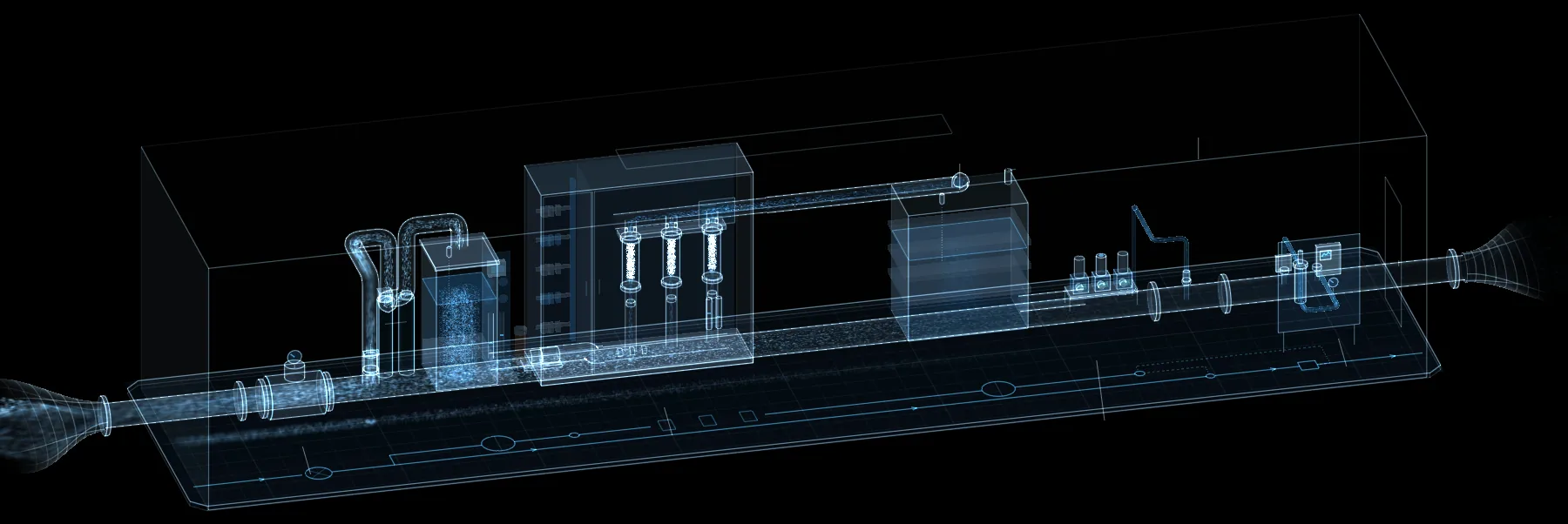
Voigtländer generator system

From on-site anolyte production to controlled dosing and final measurement.

starts when the frame is in view

Modelled from the Voigtländer plant schematic of an anolyte system in a building, in the drawing language of the home page. The cards show documented facts only, no invented figures.

  1. 1Incoming water
  2. 2Brine supply
  3. 3On-site generation
  4. 4Storage and dosing
  5. 5Measurement and outlet

Duties after a finding

What has to be clarified first after a finding

100CFU/100 ml technical action level (TrinkwV)

Once the technical action level of 100 CFU per 100 ml is reached, defined duties begin for the operator: notifying the public health authority, a Risikoabschätzung (risk assessment), cause analysis and measures whose effectiveness is subsequently verified. Only from that picture does it follow which technology makes sense at all.

Acute finding? Risk assessment under TrinkwV

  1. 1

    Confirm the finding

    Reliably identify the affected system, the sampling points and the measurement history.

  2. 2

    Prepare the risk assessment

    Evaluate use, temperatures, hydraulics and possible exposure under TrinkwV; the familiar term „Gefährdungsanalyse“ (hazard analysis) means the same task.

  3. 3

    Remove the causes

    Dead legs, stagnation, temperature problems and structural defects take priority over any dosing.

  4. 4

    Secure the measures

    Combine remediation, operational correction and, where appropriate, monitored disinfection with documented verification of effectiveness.

Recurrence cycle

Why contamination keeps coming back

Thermal disinfection and flushing work selectively. If biofilm, stagnation zones or unfavourable temperature control remain, findings return, often in different risers.

Biofilm

If biofilm stays in the system, it gives Legionella lasting shelter and a growth medium: thermal flushing reaches it only in places.

Stagnation zones

Dead legs and rarely used risers hold water back; this is where findings preferentially return, and in changing parts of the system.

Unfavourable temperature control

Where target temperatures are not held consistently, growth windows open up that a single unremarkable reading does not capture.

A single unremarkable reading does not describe the condition of a widely branched installation.

Technical approach

Placing disinfection within an overall hygiene concept

The legitimate objection first: continuous disinfection on its own remedies neither dead legs nor incorrect temperatures or other technical causes. Voigtländer is therefore used as one component of a monitored hygiene concept. The starting points are the finding, the causes and the way the system is operated. Dosing, measurement, documentation and, where applicable, further technical measures follow only from that.

From the finding, the causes and the mode of operation follows a monitored hygiene concept; from that follow dosing, measurement, documentation and, where needed, further technical measures. The order is deliberate: understand the installation first, then integrate the technology.

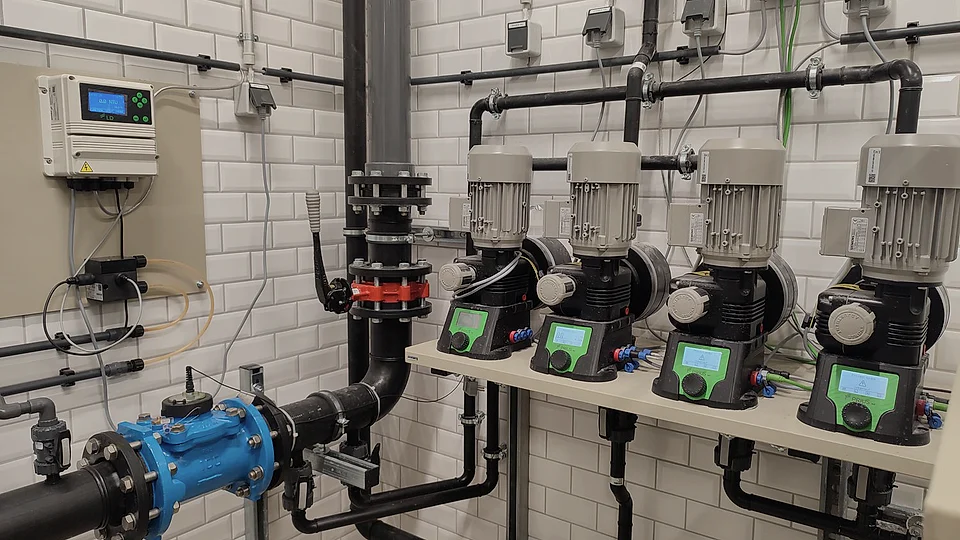
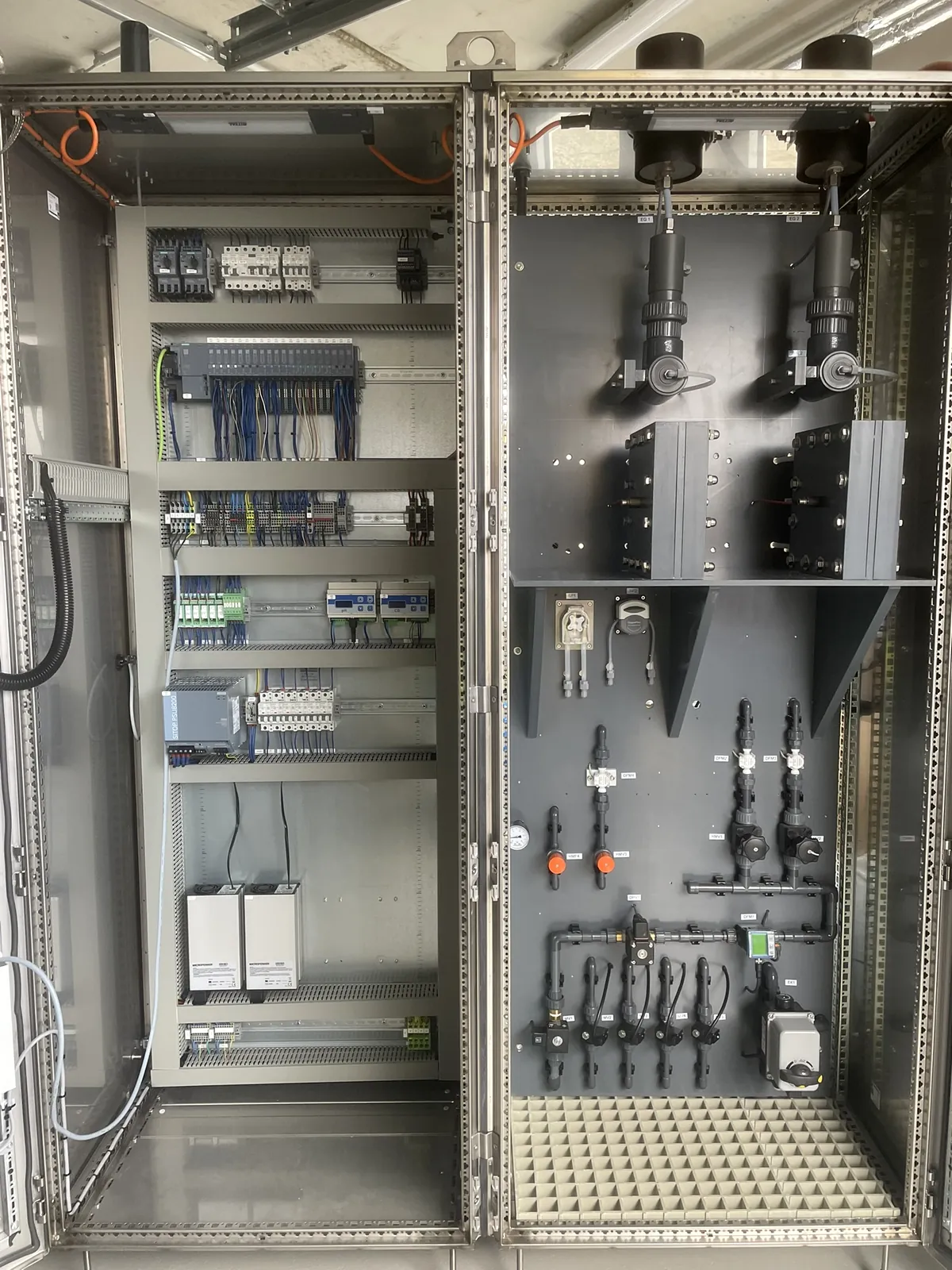
Row of dosing pumps with control unit and measurement equipment for demand-led anolyte dosing on a drinking-water installation
Demand-led anolyte dosing with continuous measurement: the technology behind the monitored hygiene concept.

The technical approach combines four tasks:

  1. 1

    Generate on site

    Anolyte (hypochlorous acid, HOCl) is produced from water, salt and electricity instead of storing chlorine dioxide precursors.

  2. 2

    Dose to demand

    The active agent is dosed into the installation as required, following measured values, not a fixed schedule.

  3. 3

    Measure the relevant values

    Measurement and control make the treatment status traceable during ongoing operation.

  4. 4

    Document operation

    Logged measurement and operating data support operator duties and evidence of effectiveness.

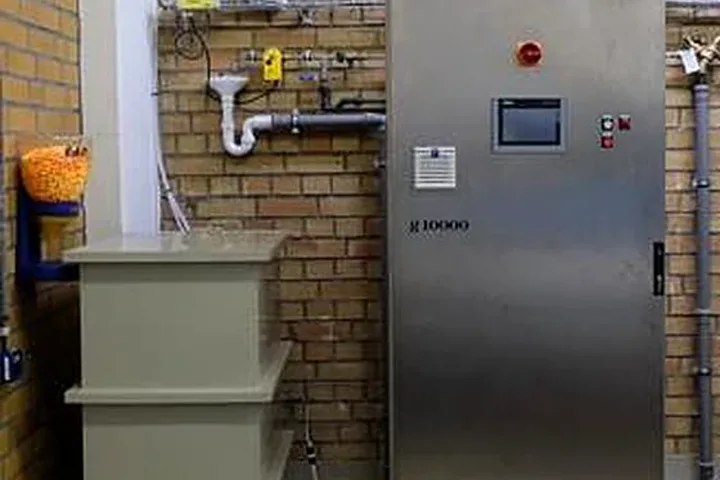
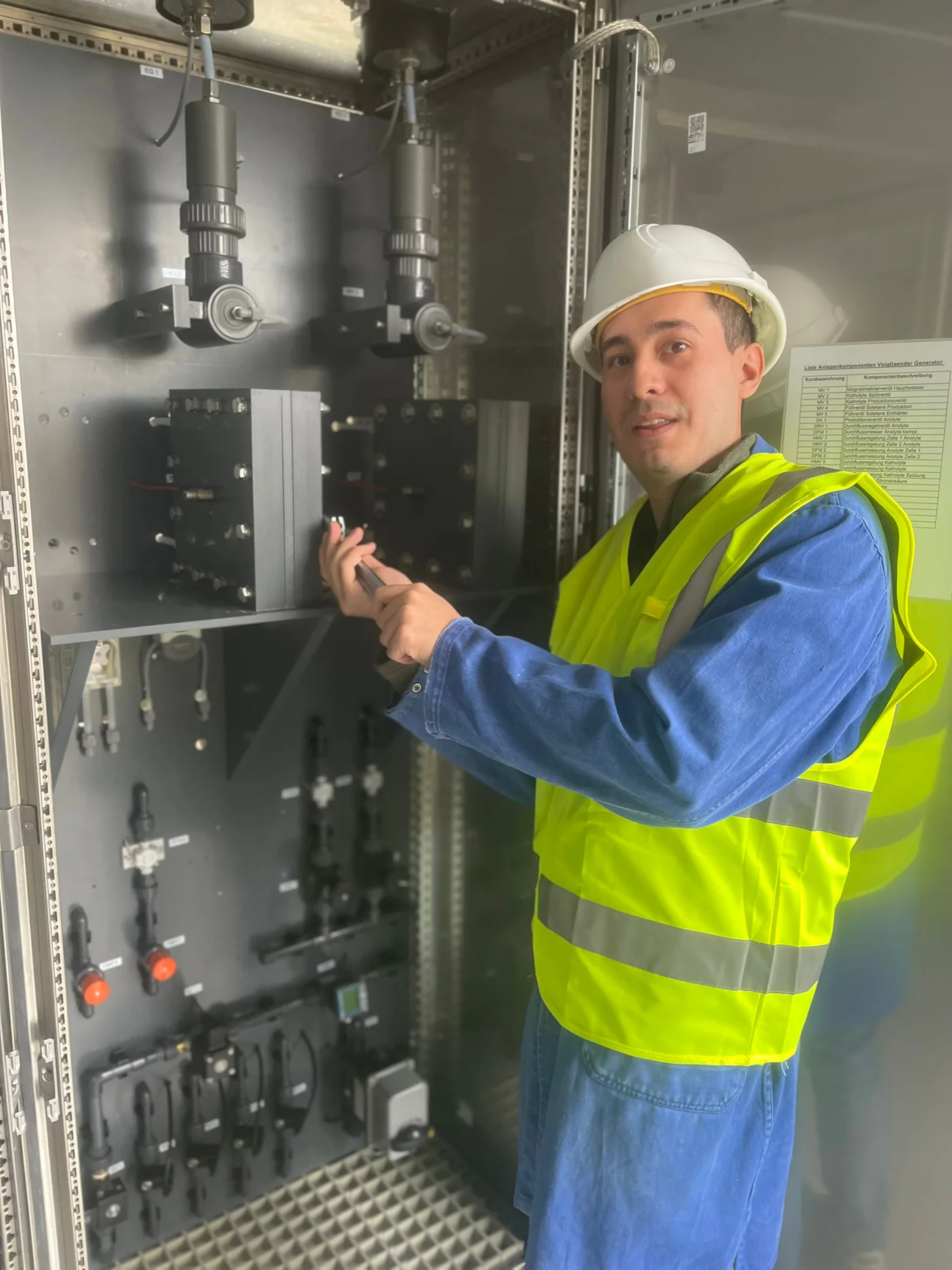
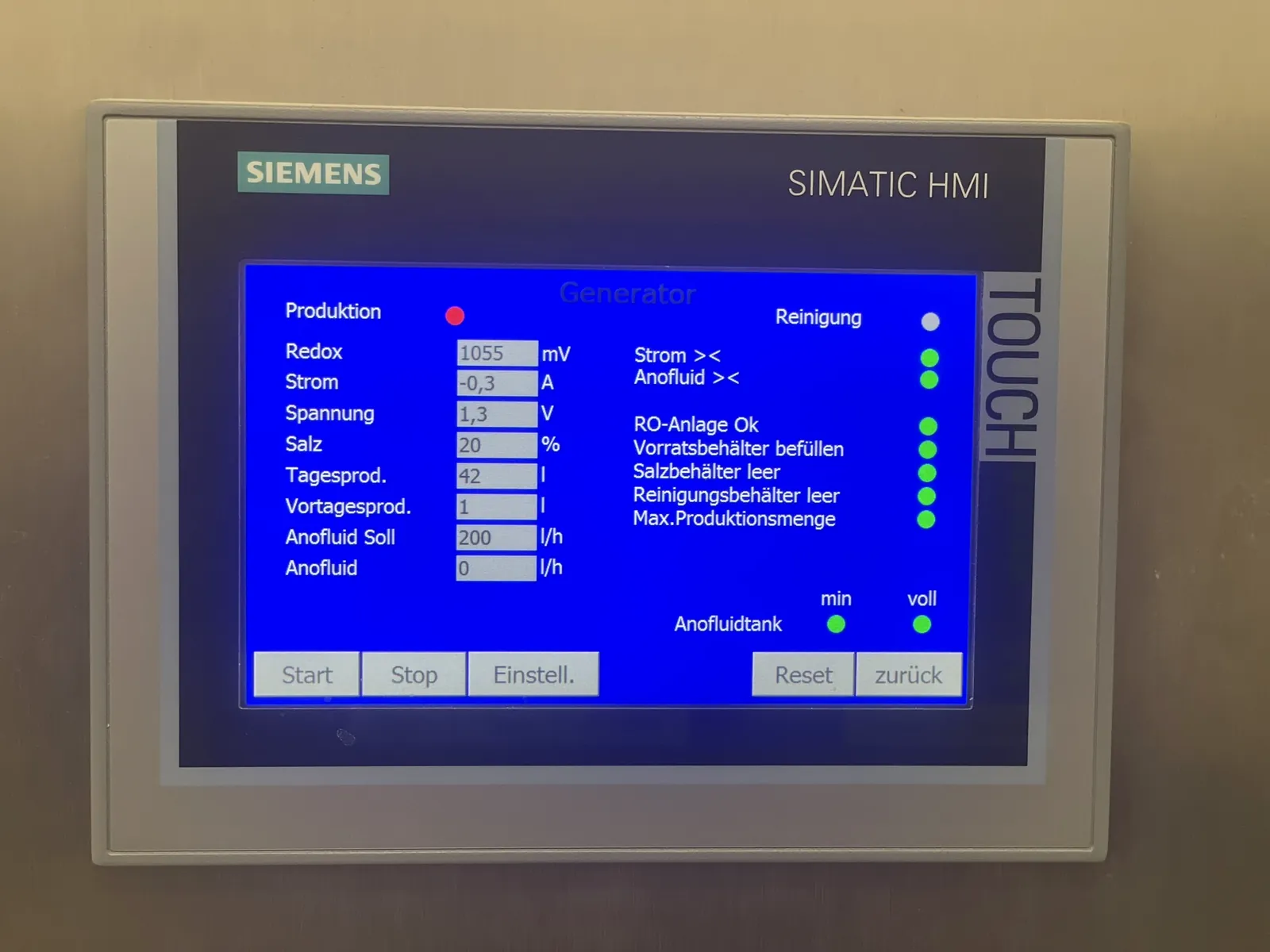
Monitoring of plant values on the operating panel
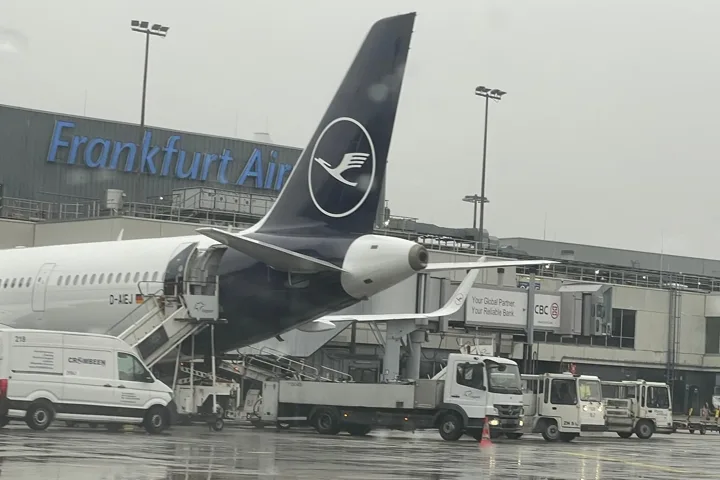
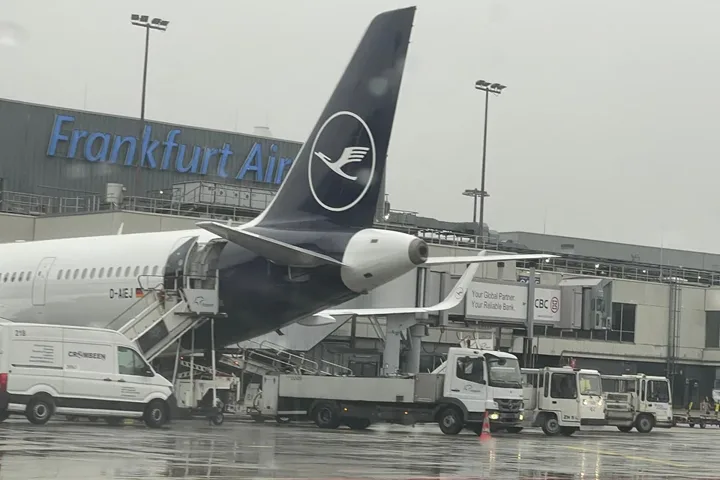
Operating values at a glance: redox, current, production and fill levels. Photographed at Frankfurt Airport.

Operation

Monitoring and documentation in day-to-day operation

Measurement, control and logging make the treatment status traceable during ongoing operation: you can see which values are being held and where action is needed. The documentation supports operator duties and evidence of effectiveness: it replaces neither sampling by accredited laboratories nor assessment by qualified specialists.

Anolyte (hypochlorous acid, HOCl, generated on site) is produced from water, salt and electricity and dosed into the installation as required. Chlorine dioxide precursors and hazardous-substance stores are not needed with this method; the specific hazard assessment remains plant-specific. Dosing follows measured values, not a fixed schedule.

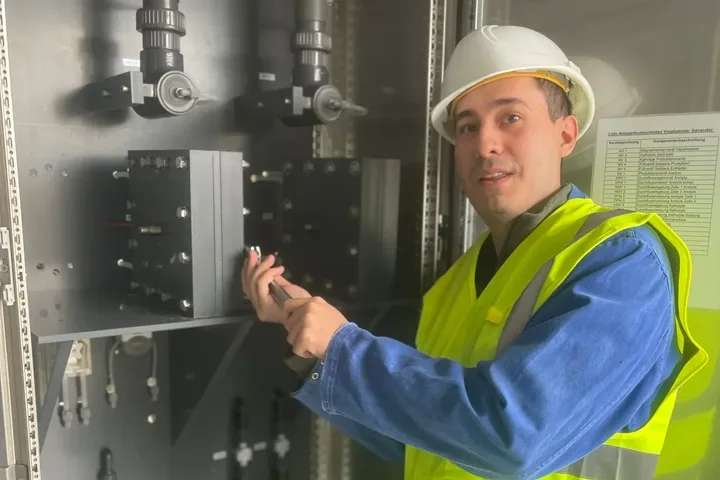
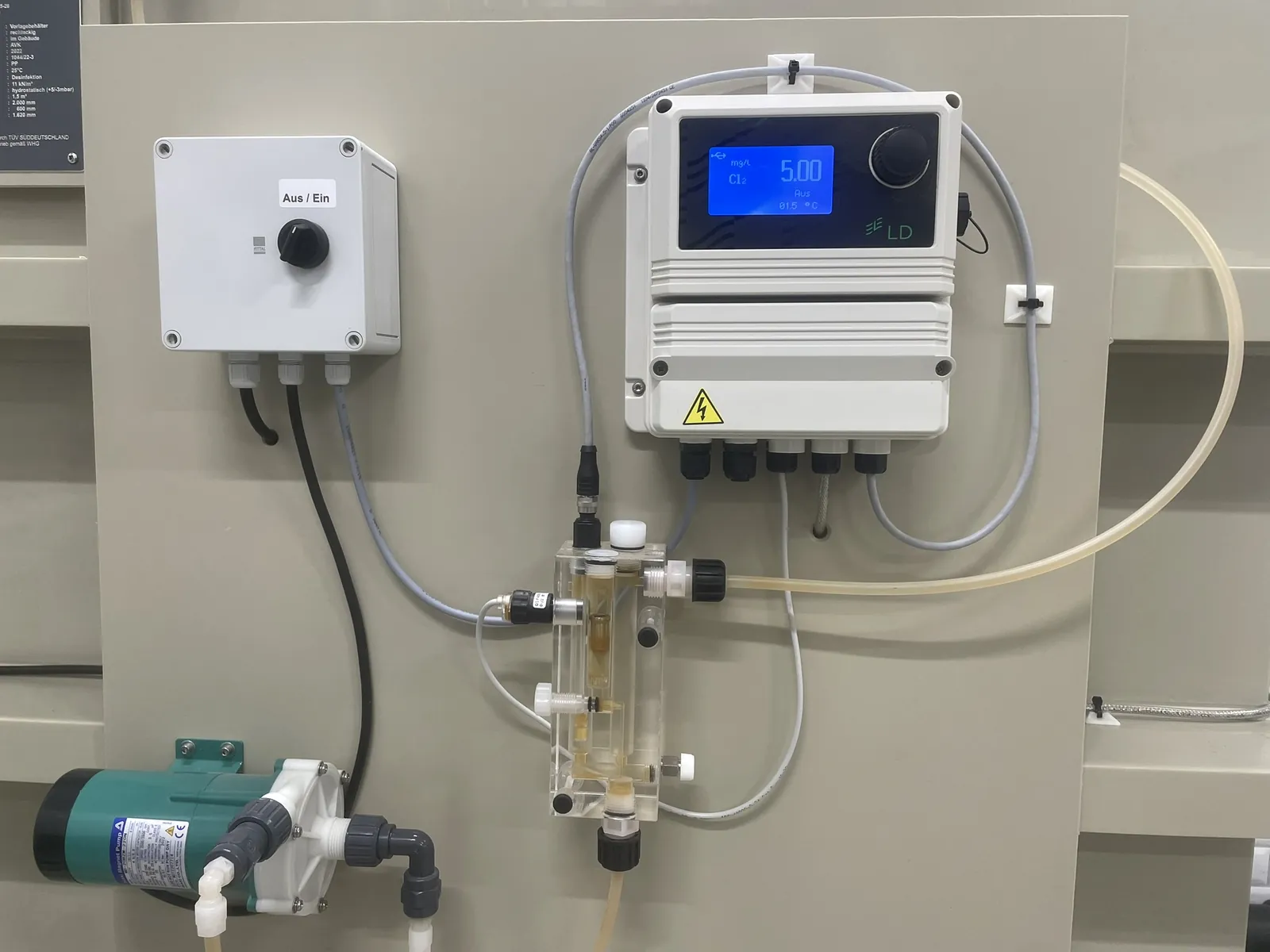
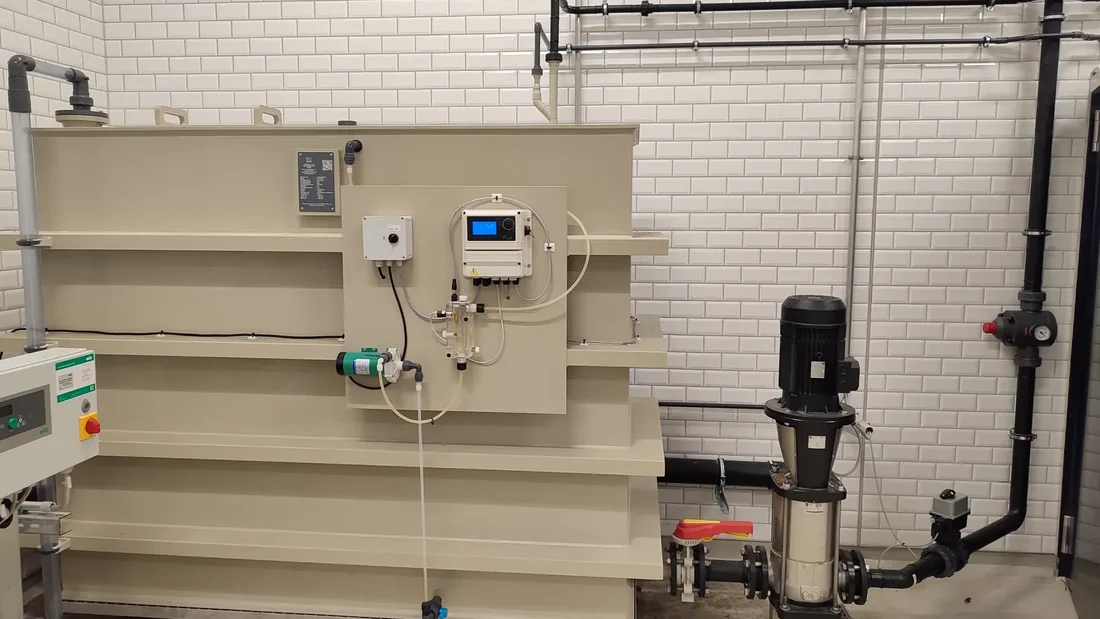
Measuring cell and controller on a Voigtländer installation
Measurement and control. Photographed at Frankfurt Airport.
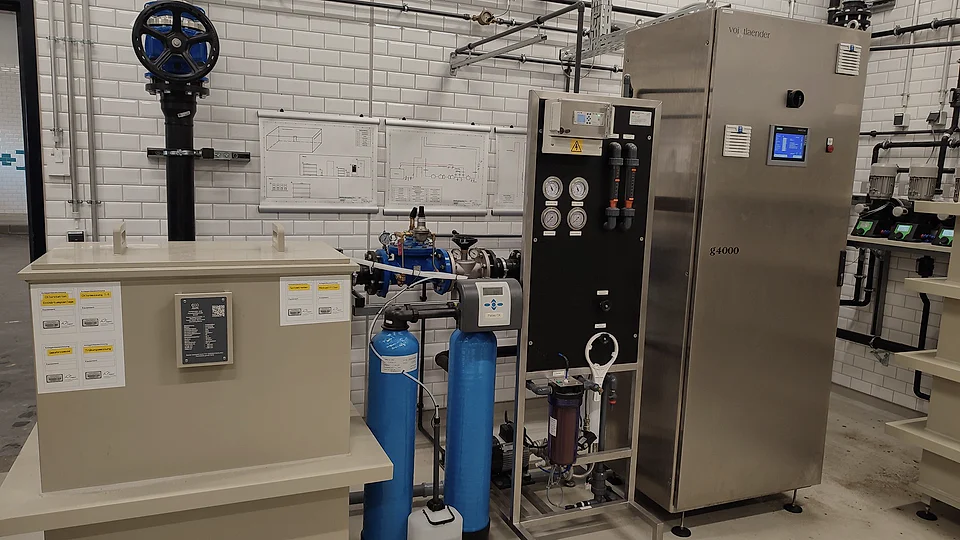
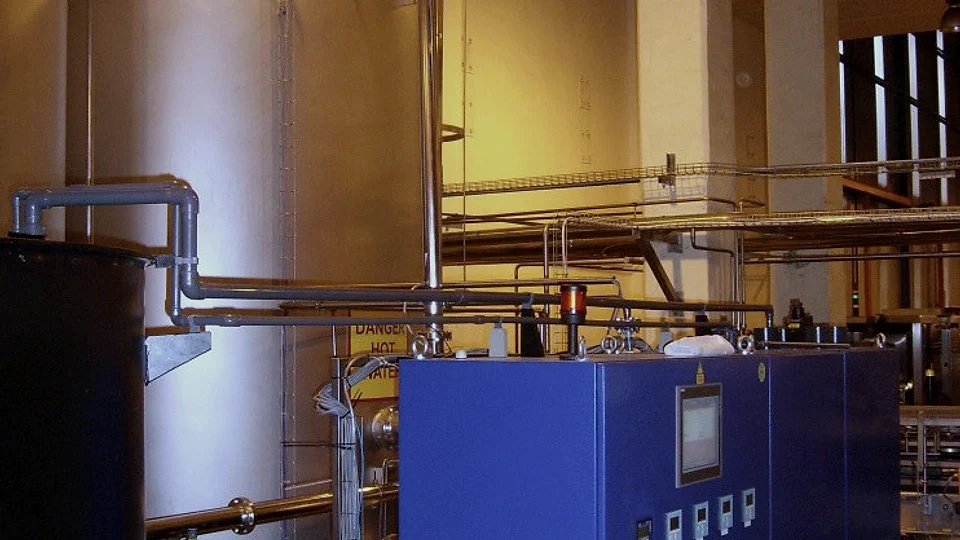
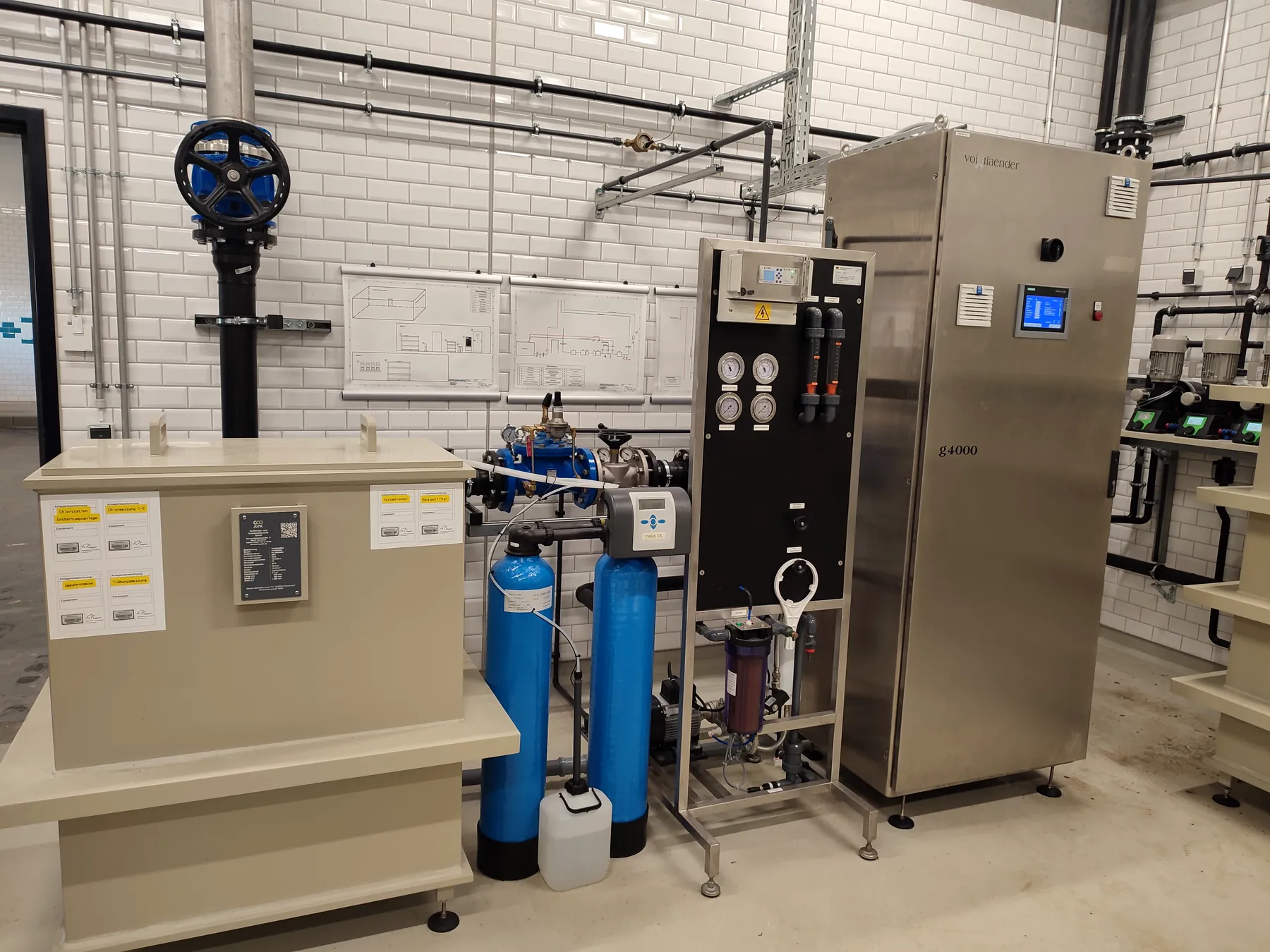
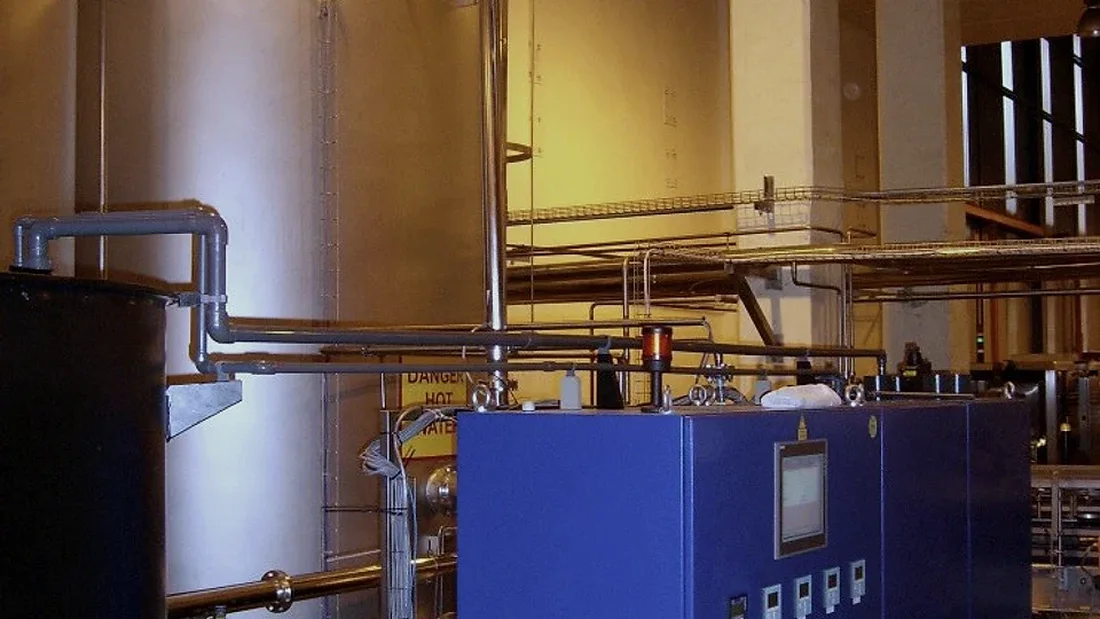
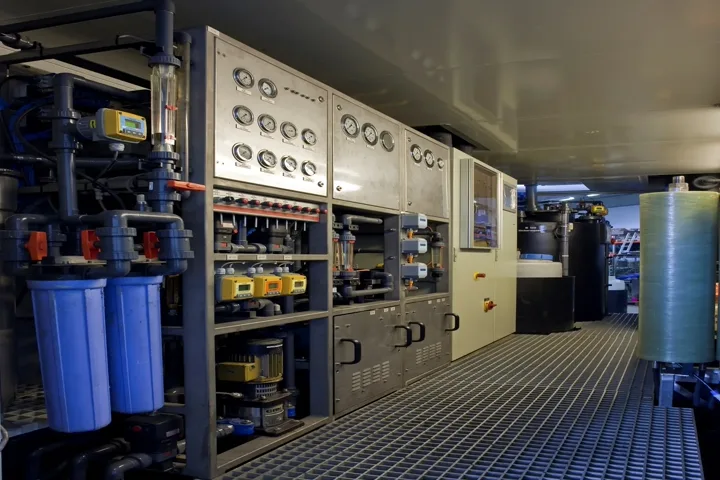
Plant room with the Voigtländer generator cabinet, tanks and pumps
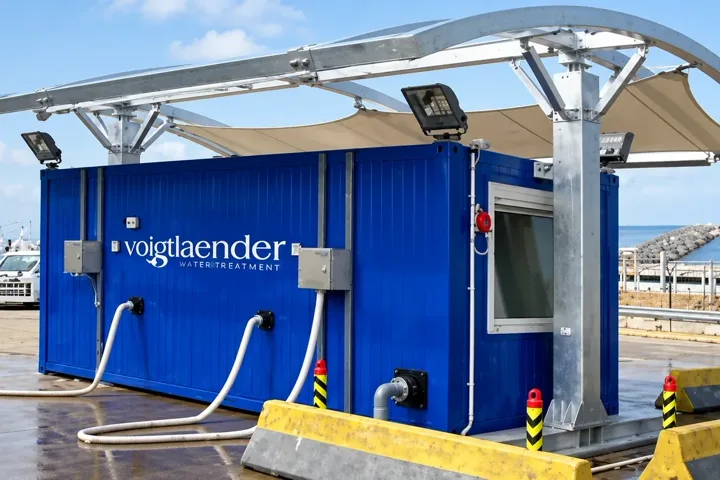
The complete system in a plant room: generator cabinet, tanks and dosing. Actual Voigtländer installation.

Reference

Ten care homes, one programme

The healthcare/HVAC primary document describes ten care homes in which thermal disinfection and flushing repeatedly proved insufficient. After a test phase, Voigtländer systems secured the drinking-water values in every building.

The names have not been released; communication remains anonymised until a reference release is in place. Results are project-specific.

10care homes in the programme
100 CFU/100 mltechnical action level (TrinkwV)
Every buildingdrinking-water values secured
30–40 m³approximate daily water consumption
Test phase
One month of testing before deployment
Status
Anonymised until a reference release is granted

Further building reference

Residential complex with 58 apartments

A Voigtländer system doses anolyte into the circulated hot water of a residential complex. The project began with a check of the water system.

Size
58 apartments
Volume
About 22 m³ of drinking water per day, about 20 m³ of it circulated
Scope
Water system check, anolyte dosing system, hot water management

Source: Hydreatio case studies. Results are project-specific.

Limits of this approach

What this approach does not promise:

  • No permanent “elimination” of Legionella as a product promise.
  • No guaranteed TrinkwV compliance through technology alone.
  • Structural and operational causes have to be remedied in parallel.

Voigtländer in other sectors

The same method, proven across sectors

Every entry is a Voigtländer application. Results are project-specific and are not a forecast for another site.

Questions before the first call

What operators ask before a hygiene screening

01Does continuous dosing replace thermal disinfection and the removal of causes?

No. Dead legs, stagnation, temperature problems and structural defects take priority over any dosing. Voigtländer is one component of a monitored hygiene concept; which measures the installation needs follows from the finding, the causes and the way the system is operated.

02What is dosed, and where does it come from?

Anolyte, hypochlorous acid (HOCl), generated on site in the Voigtländer generator from water, salt and electricity. Chlorine dioxide precursors and a hazardous-substance store are not needed with this method; the specific hazard assessment remains plant-specific.

03Does the drinking water taste different?

No change in taste is one of the documented conformity points of the Voigtländer anolyte technology, alongside DIN EN 901 and § 11 TrinkwV, DVGW W551, the TrinkwV approval by the Umweltbundesamt, WHO compliance and CE conformity. The scope depends on the specific application.

04How is dosing controlled, and how is it documented?

The active agent is dosed to demand, following measured values, not a fixed schedule. Measurement and control make the treatment status traceable during operation; the logged measurement and operating data support operator duties and evidence of effectiveness. They replace neither sampling by accredited laboratories nor assessment by qualified specialists.

05What happens after the enquiry?

The entry point is a hygiene screening: system data, findings, temperatures, mode of operation and the measures taken so far are assessed together. You receive a professional appraisal of which cause analysis, which measures and which monitoring suit your installation, and whether Voigtländer is a suitable fit for it. A finding is never evaluated on the basis of a form alone.

06Who carries out the technical side of Legionella remediation in a building's drinking water, and can it work without a chlorine dioxide store?

Under the Voigtländer brand, Hydreatio implements technical measures that may result from a risk assessment, without a chlorine dioxide store: anolyte (hypochlorous acid, HOCl) is generated on site from water, salt and electricity. Hydreatio does not carry out risk assessments; in practice, qualified specialists or specialist planners do. The operator remains responsible for commissioning and implementing the derived measures; structural and operational causes must be remedied in parallel.

07What must an operator do under the TrinkwV (German Drinking Water Ordinance) once the technical action level of 100 CFU per 100 ml for Legionella is reached?

Once the technical action level is reached in a drinking water installation subject to mandatory testing, the operator must act without delay and report the finding to the public health authority, unless the authorised laboratory has demonstrably already notified it. The TrinkwV and supplementary German Environment Agency recommendations point to a sequence: assess the finding, investigate causes, assess risk, implement measures, demonstrate effectiveness. Technology choice comes last.

Last reviewed: October 2026

Next step

Hygiene review for a hospital or care home

The entry point is a hygiene screening: system data, findings, temperatures, mode of operation and the measures taken so far are assessed together. You receive a professional appraisal of which cause analysis, which measures and which monitoring suit your installation, and whether Voigtländer is a suitable fit for it.

  1. 1You describe the site, the findings and the measures so far.
  2. 2Specialists assess your enquiry.
  3. 3You receive a professional appraisal.

Have your hygiene situation assessed

Briefly describe the site, the findings and the measures taken so far. A few details are enough for a first contact.

We use your details to process your enquiry (Art. 6(1)(b) GDPR). Information on processing is set out in the privacy policy.

Your enquiry is assessed by specialists. A finding is never evaluated on the basis of a form alone.