
 ▶
 ▶
- Guides
- Practical Guides
- EU 2025/20
Practical Guide Aviation
EU 2025/20: Drinking water services in ground handling
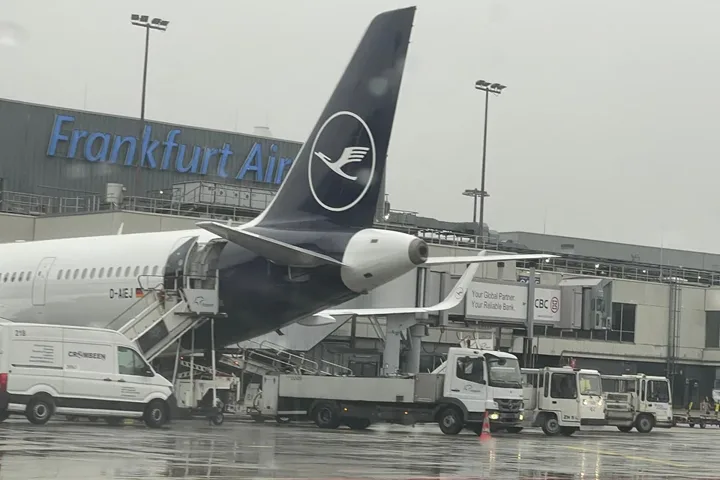
Delegated Regulation (EU) 2025/20 is a ground-handling safety regulation, not a drinking water regulation. Its general requirements will apply from 27 March 2028. Within this framework, GH.OPS.320 sets out how a ground-handling organisation must safely organise the provision of drinking water to aircraft.
What applies now
- The Regulation is in force; the general requirements apply from 27 March 2028.
- Initial statements from the organisations concerned have been released on 27 March 2027 intended.
- GH.OPS.320 requires procedures for the drinking water service to be agreed with the airport operator, as well as periodic quality checks.
- AMC1 GH.OPS.320 describes checks at handover points and retained evidence as acceptable Verification procedure, not as a binding regulatory text.
What ground-handling safety requirements will apply from 2028 onwards
Regulation (EU) 2025/20 places ground handling within a uniform European safety framework for the first time. Drinking water forms part of a safe ground-handling process, alongside vehicle operations, personnel and apron safety, and is not separate from them.
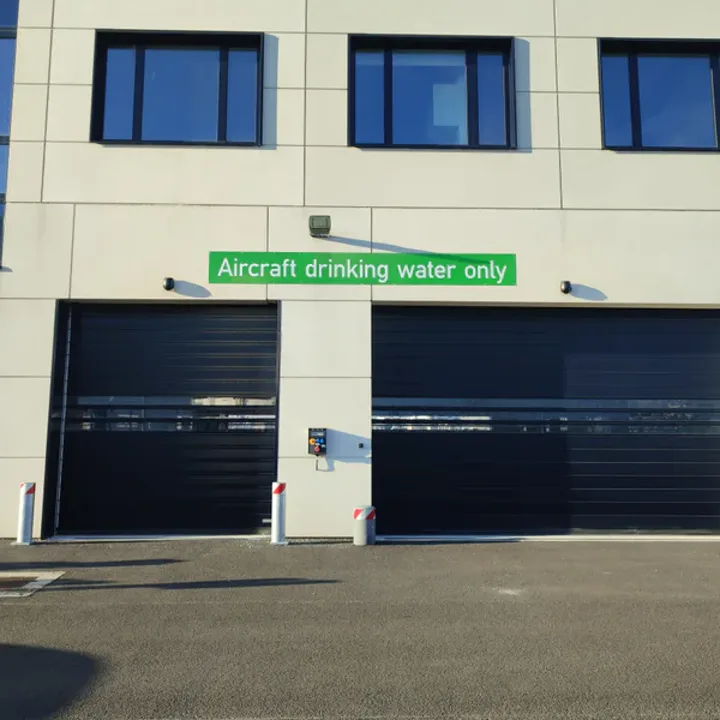
GH.OPS.320 Requires procedures for the drinking water service to be agreed with the aerodrome operator. Water taken on board an aircraft must be free from relevant chemical substances and micro-organisms. Water quality must be tested periodically in accordance with the requirements of the local health authority and the aircraft operator’s procedures. The regulation also specifies personal protective equipment and the prevention of foreign objects in the operational area.
Which handover points are being inspected
| Handover point | Checkpoint | |
|---|---|---|
| Source | Power supply at the airport | ✓ |
| Storage | Tanks and fixed pipework | ✓ |
| Filling point | Handover to the vessel | ✓ |
| watercraft | Hose and service life | ✓ |
| Aircraft fuel tank | Final handover on board | ✓ |
Drinking water route with transfer points. The route taken by drinking water from the source, via storage tanks, a filling point and a water tanker, to the aircraft’s fuel tank. Checks are carried out at every handover point (✓ = checkpoint at each handover point; direction of flow of the drinking water from top to bottom).
AMC1 GH.OPS.320 specifies that regular testing at various transfer points, before the water is transferred into the aircraft’s drinking water tank, is an acceptable method of verification: from the source, through stationary storage facilities and filling points, to water tankers and hoses. It also covers the cleaning, labelling, maintenance and decommissioning of potable water vehicles.
It is not possible to derive a universal inspection interval from this. Local health requirements, the aircraft operator’s procedures, the actual flow path and the relevant handover points together determine the inspection schedule for the specific site.
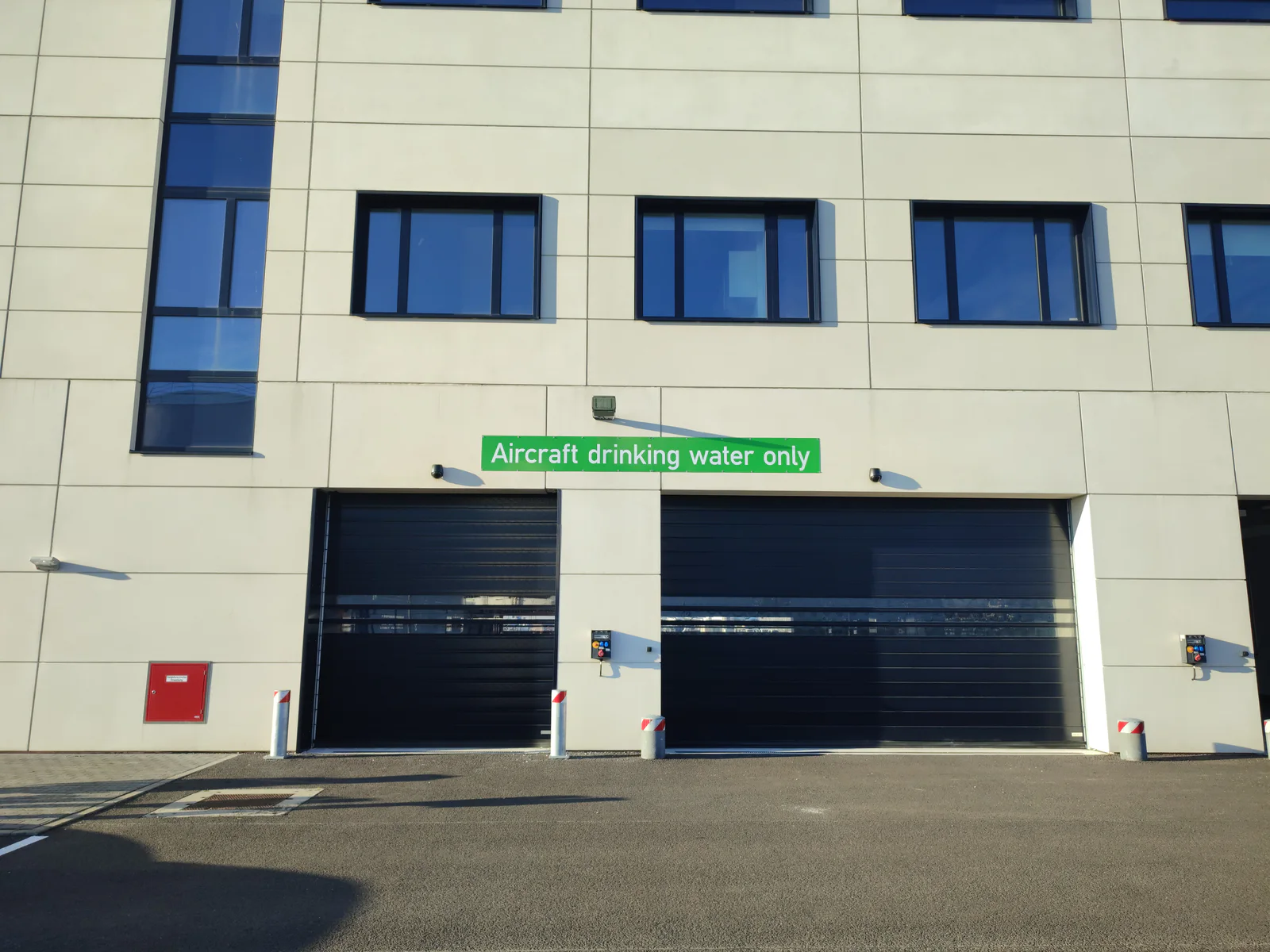
What documentation do operators and ground handlers need?
Clarify the interfaces. Who is responsible for the source, on-site storage, filling point, vehicle, handover and the relevant authorisation? A contract heading alone rarely provides a complete answer to this question.
Set up an inspection plan specific to the site. Consider handover points, local health requirements and operational procedures as a whole; do not simply adopt a calendar interval.
Keep and organise supporting documents. Keep records of test results and proof of cleaning and disinfection in such a way that they can be linked to the relevant handover point.
Define the response to the findings. A laboratory result is only of practical value if the responsible parties, the escalation procedure, the investigation of causes, corrective action and verification of effectiveness have been established.
What the Ground Handling Regulation does not cover
Limits
- It is not a water quality or Trinkwasserverordnung and does not replace the applicable drinking water regulations.
- It does not prescribe any specific treatment technique, not even those from Hydreatio or Voigtländer.
- AMC material is an acceptable means of verification; an organisation may also use other means of verification, subject to the applicable conditions.
- Technical equipment alone does not ensure that an operation complies with the regulations.
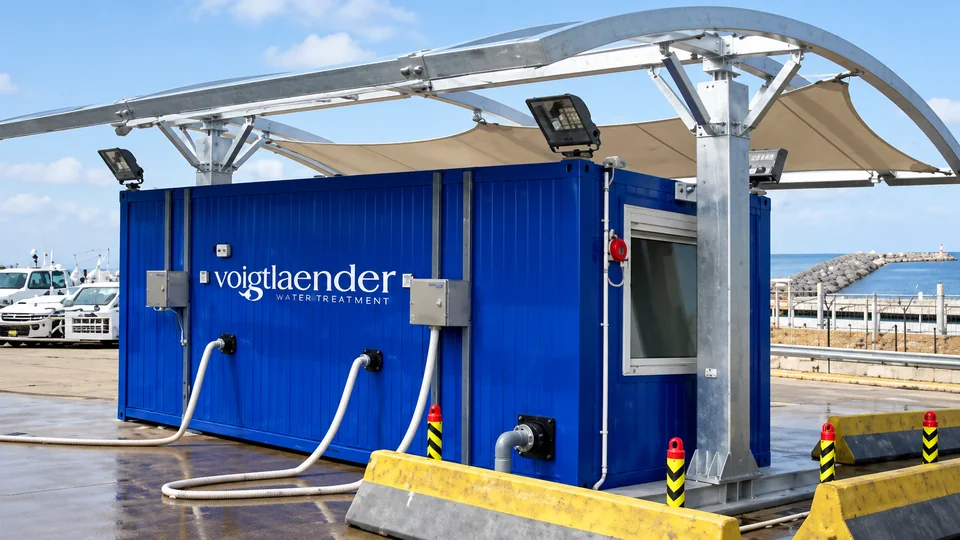
Checking the drinking water supply in practice
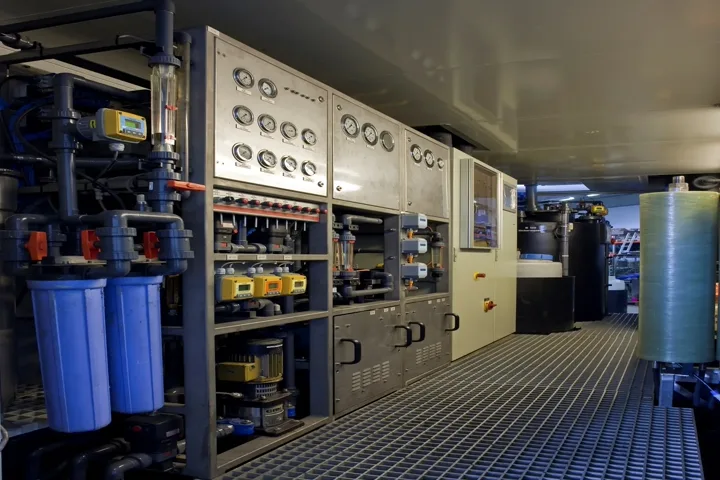
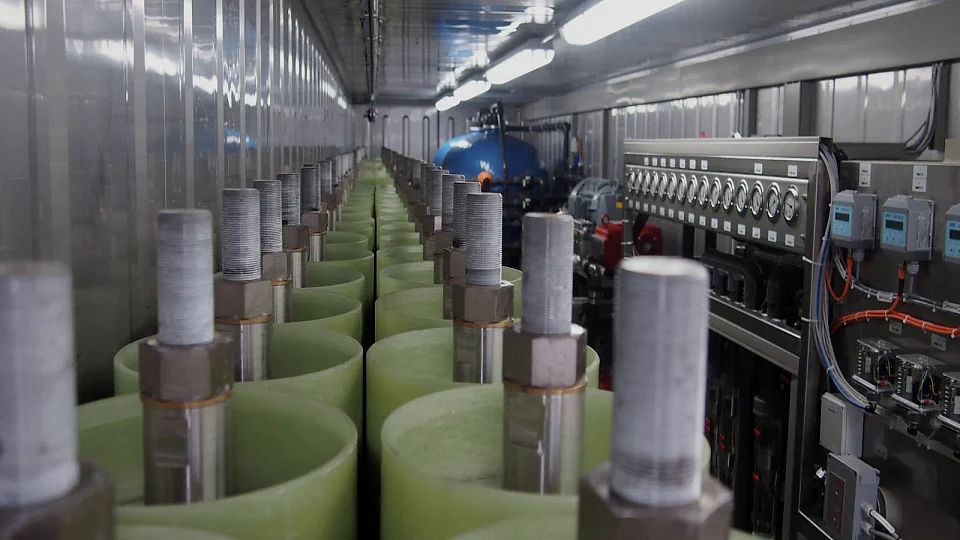
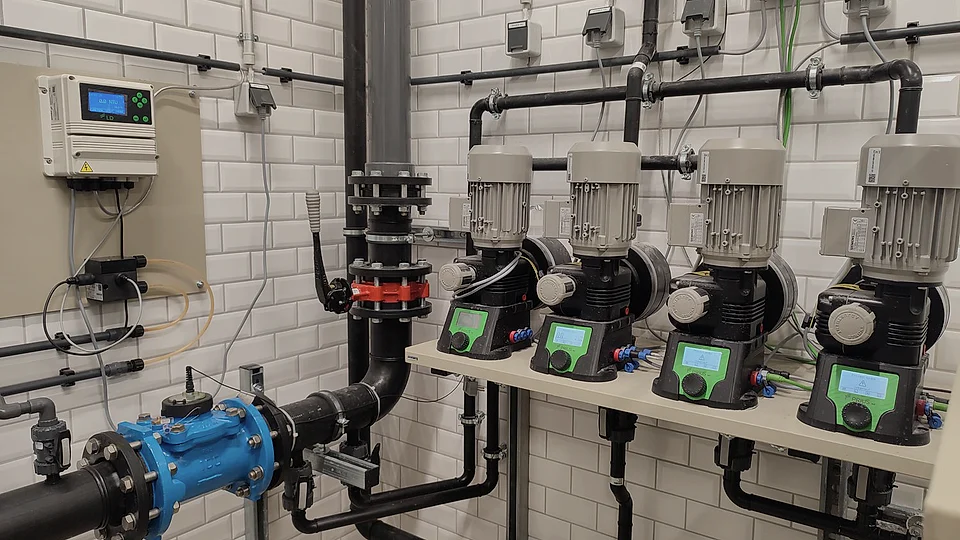
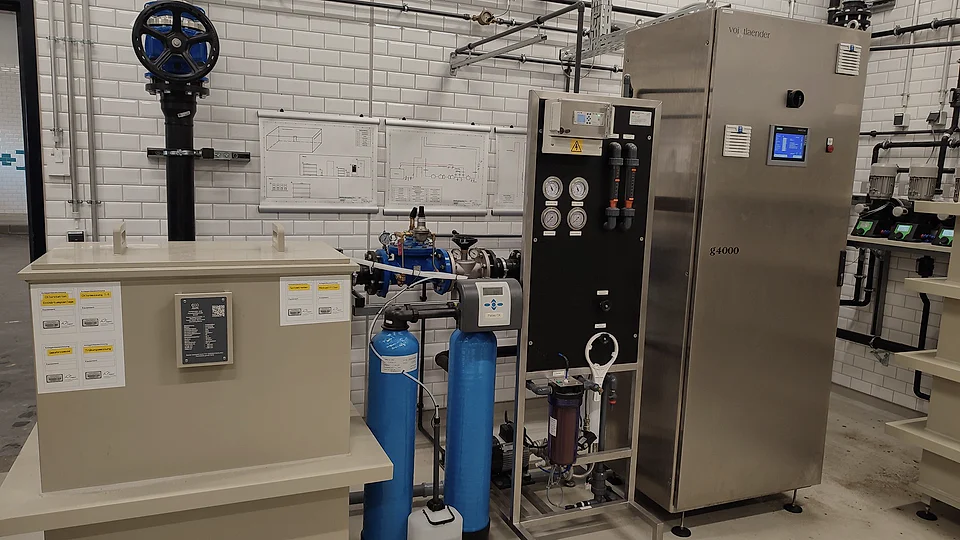
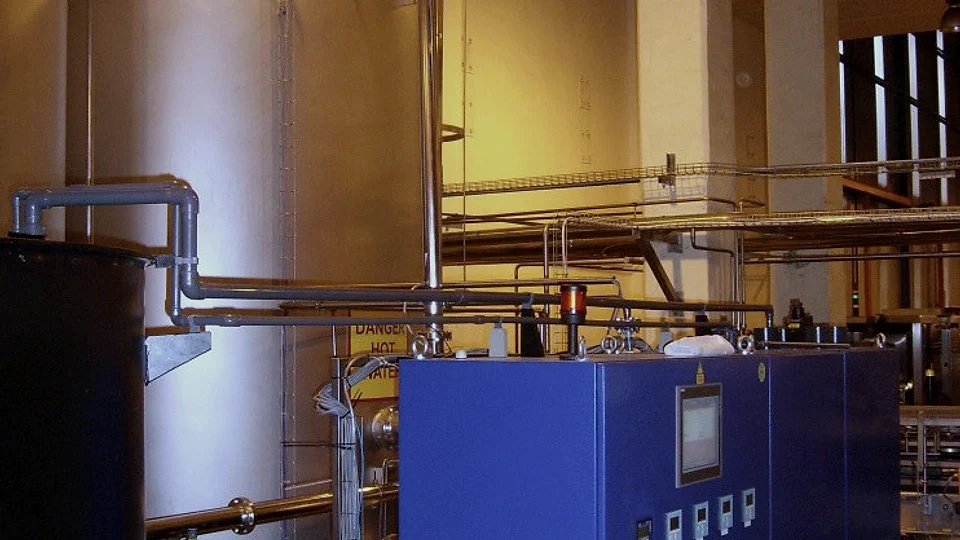
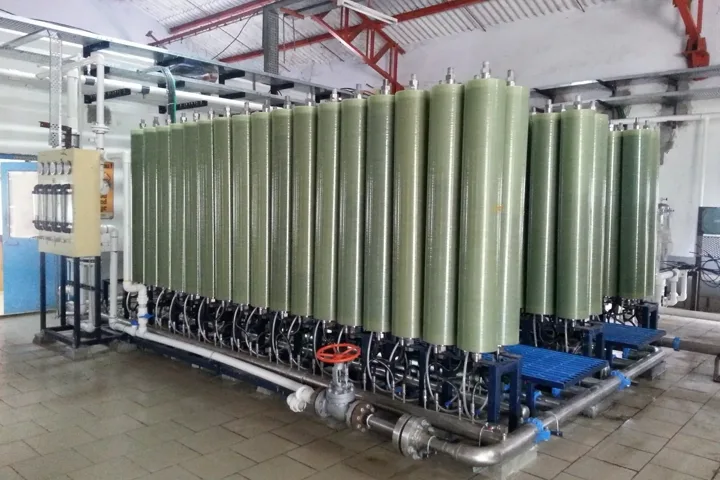
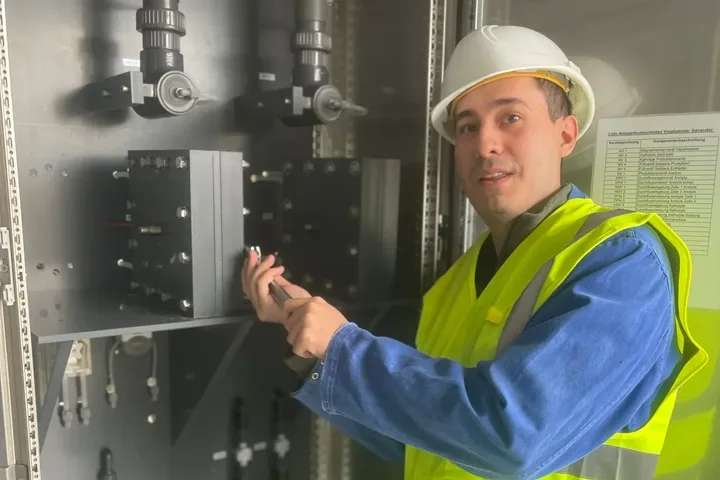
On-site production, controlled dosing, online monitoring and documented operating data can all form part of a robust hygiene concept. The appropriate technical approach can only be determined by taking into account water quality, the process, materials, capacity, local requirements and operational procedures.
A sensible place to start is a drinking water hygiene audit that covers the actual process from source to delivery. The result is not mere compliance on paper, but a clear list of verified checks, outstanding documentation and prioritised next steps.
Check the drinking water supply at the airport: from the source to the handover.
Primary sourceEASA Easy Access Rules for Ground Handling, November 2025 edition: Delegated Regulation (EU) 2025/20, GH.OPS.320 and AMC1 GH.OPS.320. The general applicability from 27 March 2028 relates to the relevant ground handling rules. Local health regulations and operator procedures must also be checked. Delegated Regulation (EU) 2025/20 (EUR-Lex)