1. Home
  2. Applications
  3. Drinking water for aircraft

Voigtländer · Aviation

Keep the drinking water supply for aircraft safely under control

Voigtländer, a product brand within the Hydreatio group, treats and monitors aircraft drinking water: the disinfectant is generated on site and dosed under control. This concerns airport operators, ground handling organisations and those responsible for water quality and engineering. Delegierte Verordnung (EU) 2025/20 (Delegated Regulation) is a ground handling safety regulation, not a water regulation. It generally applies from 27 March 2028; GH.OPS.320 (potable water servicing) covers aircraft drinking water. Technology alone does not create conformity.

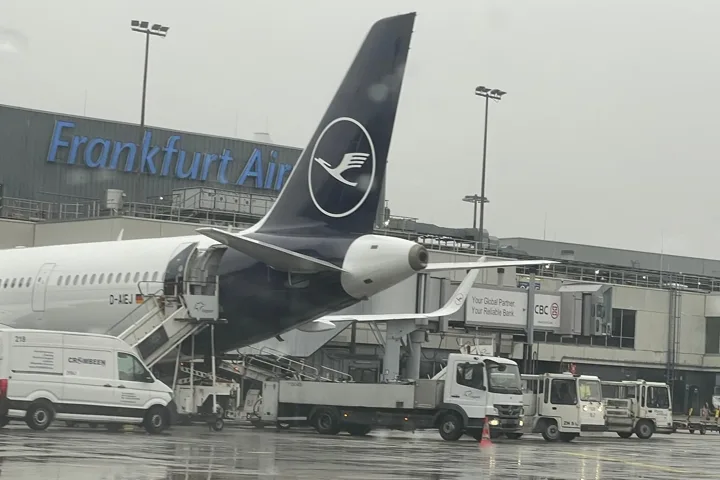
View the Frankfurt Airport reference

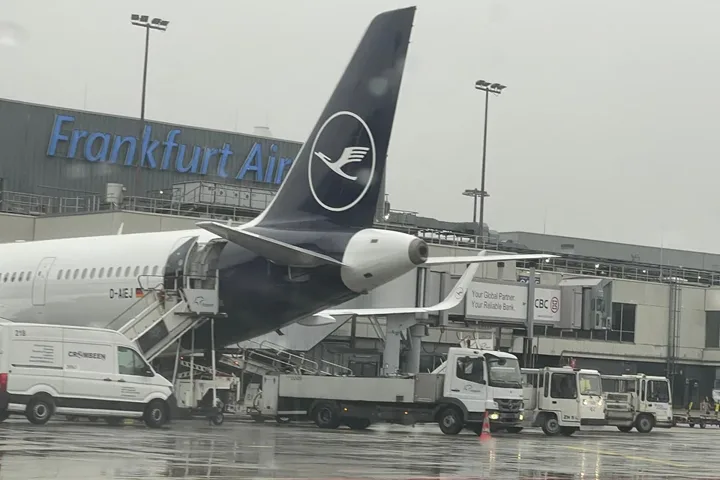
In use in the drinking water supply at Frankfurt Airport since 2003.

Project results are reported as values for this site, not as a general guarantee.

Standards & conformity
  • DIN EN 901 · § 11 TrinkwV
  • DVGW W551
  • TrinkwV approval (Umweltbundesamt, the German Environment Agency)

Relevance and trigger

Who drinking water hygiene in aviation is relevant for

This concerns airport operators, ground handling organisations and those responsible for drinking water quality, engineering, quality assurance and water vehicles.

Particularly relevant if one of these points applies:

  • Disinfection regularly ties up vehicles or staff.
  • Tanks, transfer points, hoses and vehicles are considered separately, even though they form one supply chain.
  • Measured values and records sit in several systems or are not available end to end.
  • Quality deviations occur repeatedly or cannot be clearly assigned to a single transfer point.
  • An existing process is to be reassessed technically, hygienically and commercially.

The topic is not relevant if all that is being sought is a blanket confirmation of legal compliance or a plant without a survey of the existing situation. A sound assessment replaces neither operational responsibility nor sampling, root cause analysis or the requirements of the competent authorities.

Risk along the water path

Where risks arise in the supply chain

Drinking water does not stay under control simply because it reaches the airport in perfect quality. Between the feed-in point and the aircraft there are several storage, transport and transfer points. At every point, operating condition, cleaning, standing time, material, temperature and handling can influence water quality.

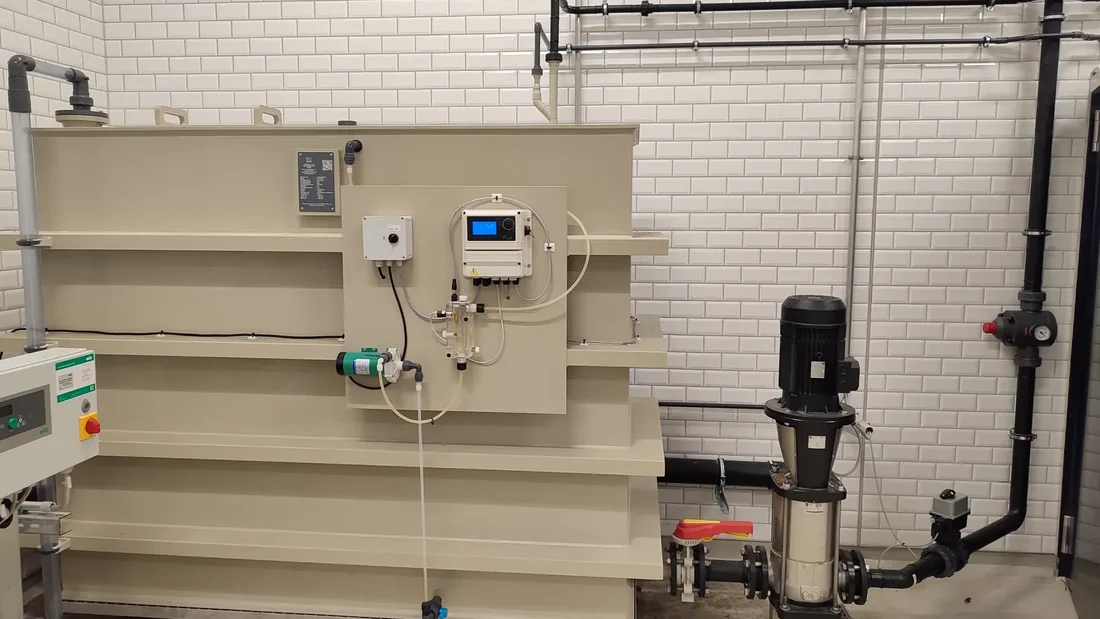
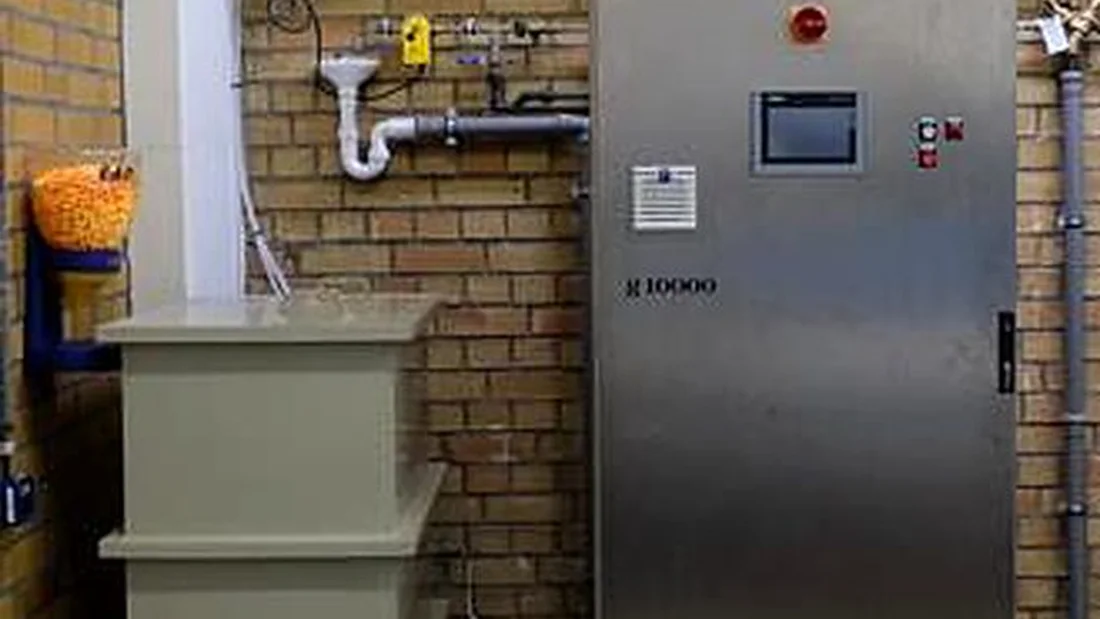
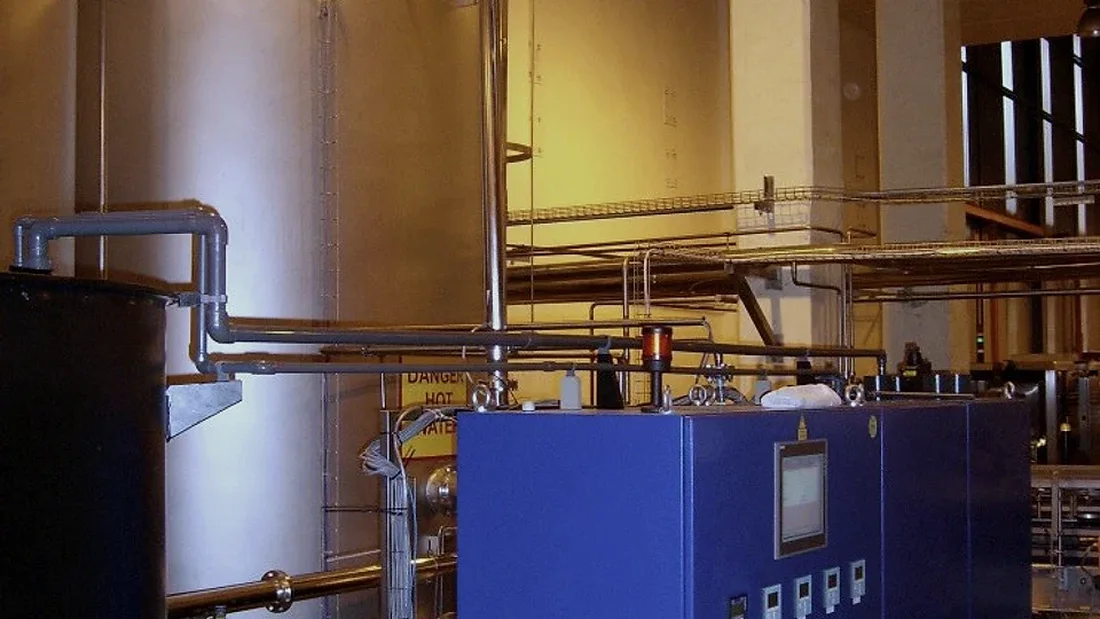
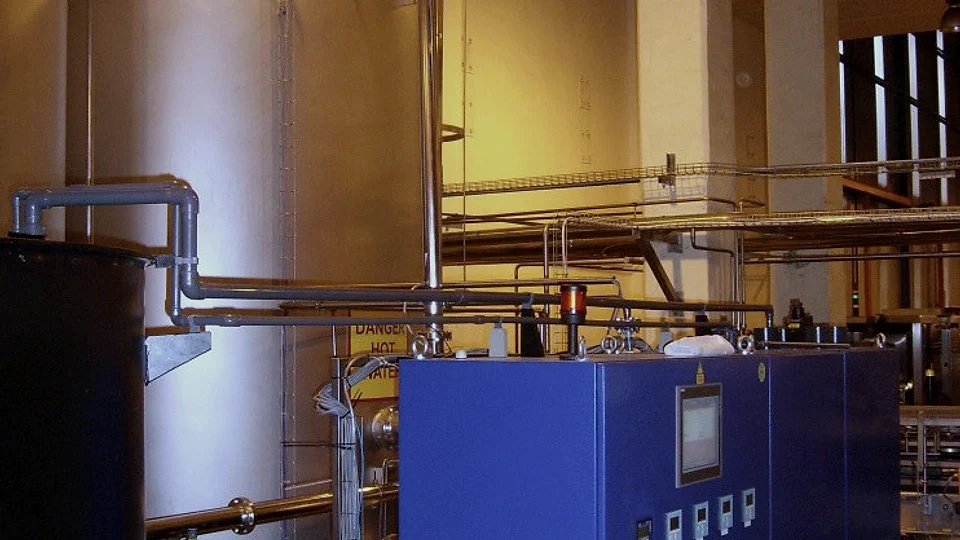
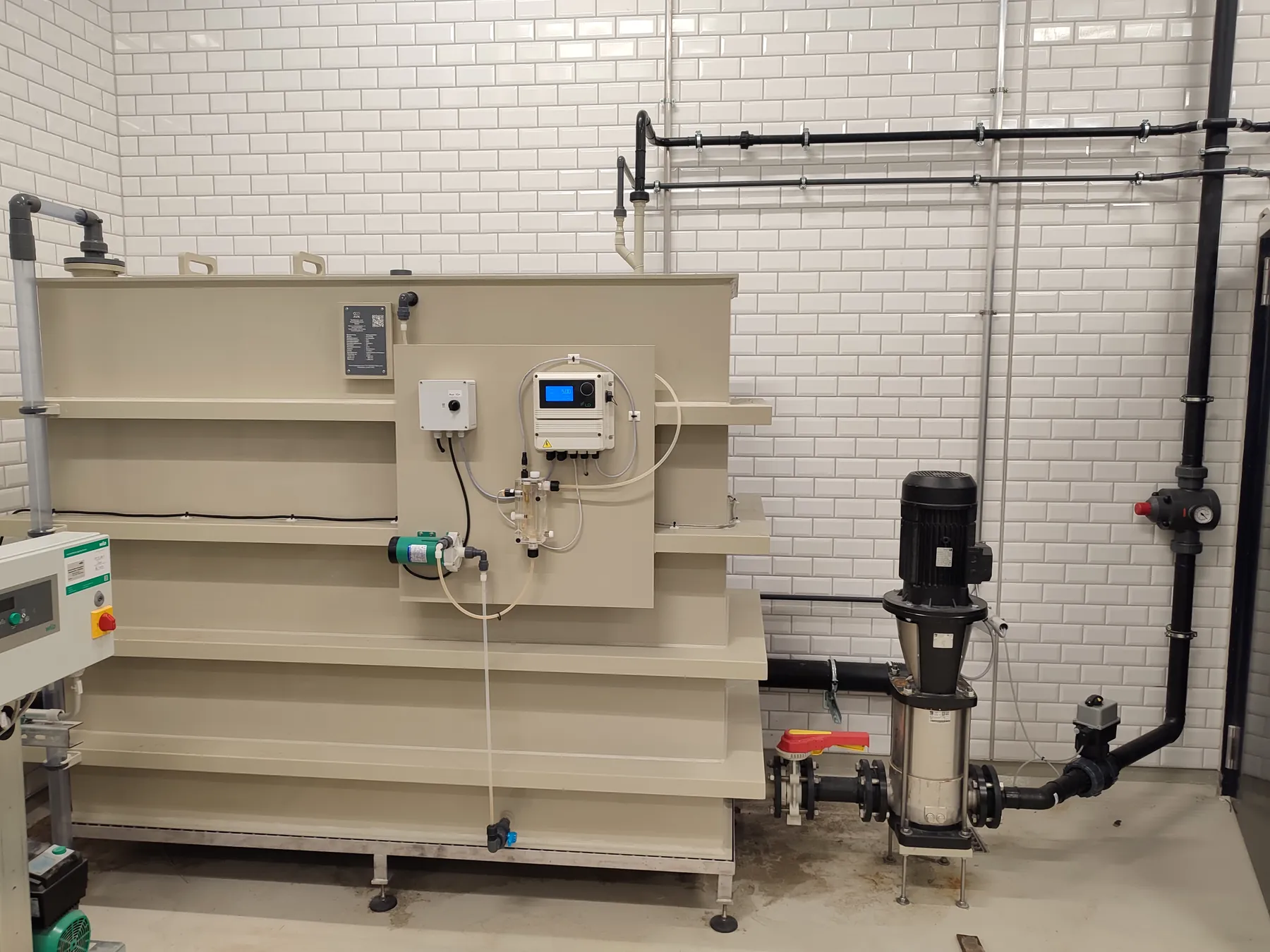
Storage tank with measurement. Photographed at Frankfurt Airport.

1

Storage tanks and transfer points

Storage tanks and fixed pipe sections determine how long water remains in the system and how reliably the treatment condition is maintained through to the next transfer point. The assessment covers not only tank volume and throughput, but also stagnation areas, cleaning practice, dosing point, measuring point and sampling plan.
2

Water vehicles and hoses

Water vehicles and hoses connect the fixed infrastructure with the aircraft. Filling, standing time, cleaning, disinfection and handling on the apron all have to fit together. A single good measured value does not fully describe this process chain.

3

Supplying the aircraft

The last transfer point decides the condition in which the water enters the aircraft drinking water tank. This is where water quality, vehicle operation, hose hygiene and the requirements of the aircraft operator come together.

Delegated Regulation (EU) 2025/20 is a ground handling safety regulation. It generally applies from 27 March 2028 and is not a general water rule. Within this safety framework, GH.OPS.320 covers the drinking water service for aircraft. AMC1 GH.OPS.320 describes regular testing at various transfer points before the water is taken into the aircraft drinking water tank, together with retained records, as an acceptable means of compliance.

For the ground handling organisations concerned, GH.OPS.320 requires, among other things, coordination with the aerodrome operator; the aircraft operator's procedures remain relevant for periodic quality testing. This page therefore does not promise conformity through technology alone.

More on this in the guide: Ground handling requirements from 2028.

From operation

Briefly explained: 30-second insights

Three short excerpts from live operation (videos in English).

When you start playback, a connection to YouTube (Google) is established; personal data may be transferred to third countries in the process. Details in the privacy policy.

The process

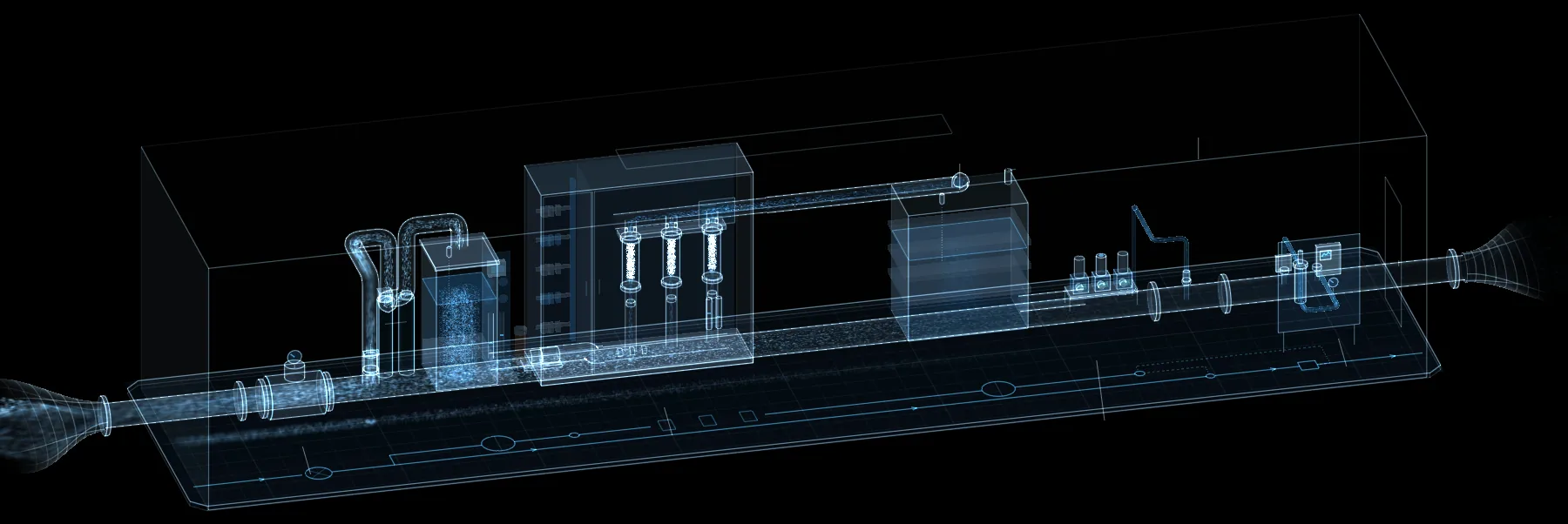
Voigtländer generator system

From on-site anolyte production to controlled dosing and final measurement.

starts when the frame is in view

Modelled from the Voigtländer plant schematic and the owner's photographs, in the drawing language of the home page. The cards show documented facts only, no invented figures.

  1. 1Incoming water
  2. 2Brine supply
  3. 3On-site generation
  4. 4Storage and dosing
  5. 5Measurement and outlet

Technical approach

Treating and monitoring drinking water on site

Voigtländer generates anolyte on site as required. The active substance is produced from water, salt and electricity and dosed under control into the intended water path. In the Frankfurt application this removes the need to handle chlorine gas. The solution is not described as chemical-free, and no blanket claim of that kind is made about chlorine.

The technical approach combines four tasks:

  1. 1

    Generate on site

    The active substance is produced at the point of use instead of storing and transporting chlorine gas.

  2. 2

    Dose appropriately

    The dosing point and target range are designed for the existing water logistics.

  3. 3

    Monitor the relevant values

    Measurement and control make the treatment condition traceable in operation.

  4. 4

    Document operation

    Defined measurement and operating data support the review of trends and deviations.

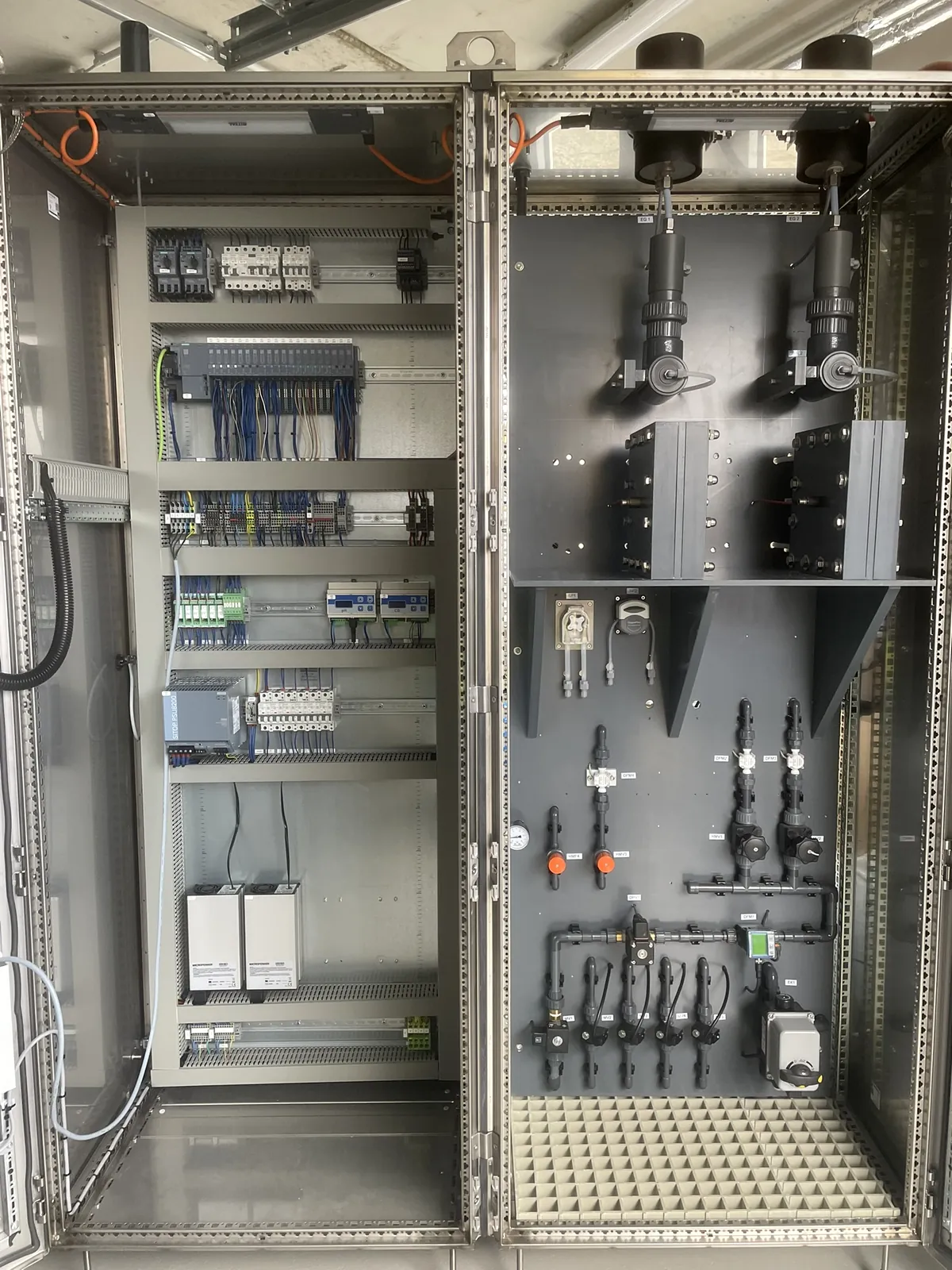
Three-chamber generator producing anolyte on site
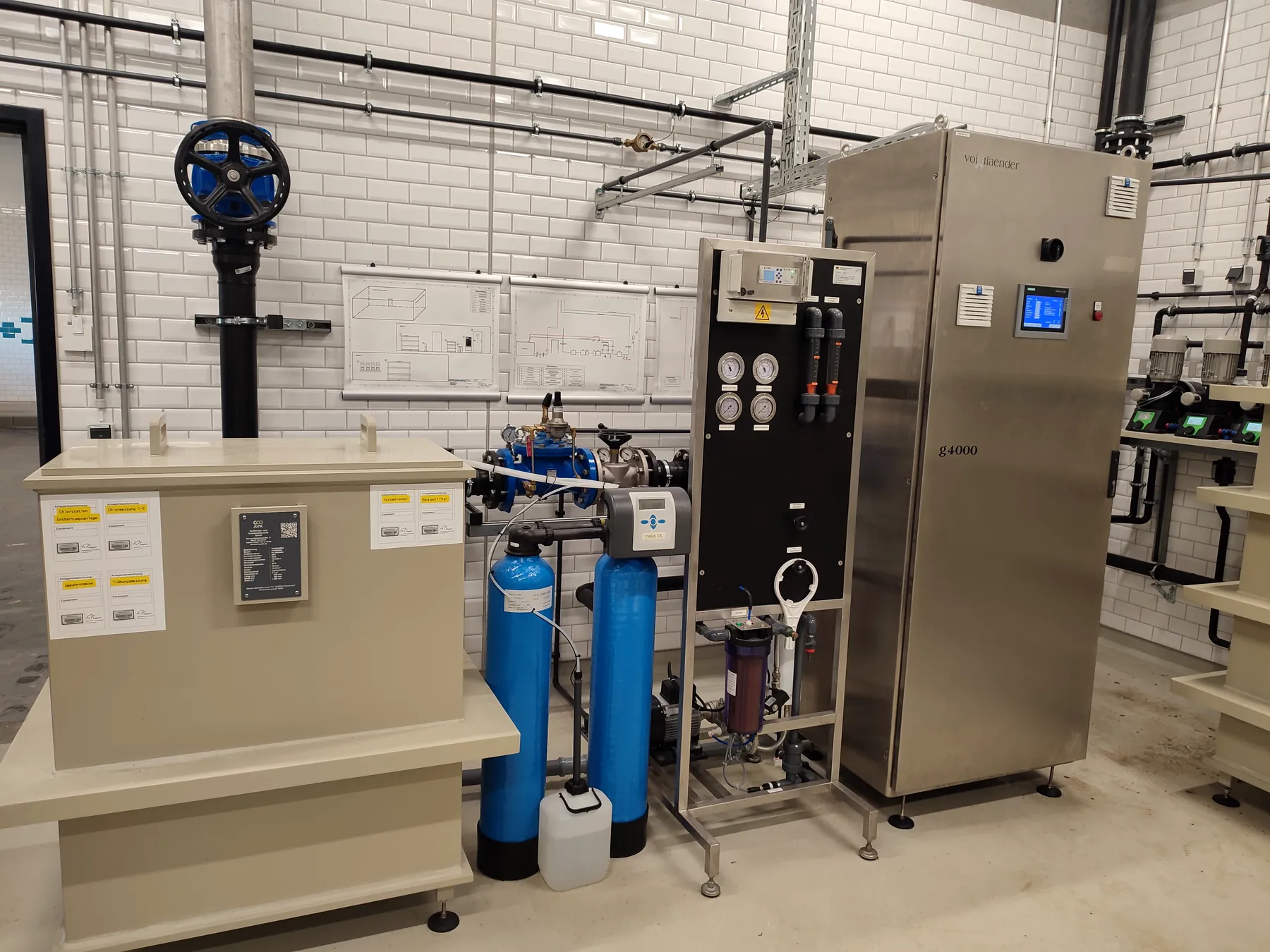
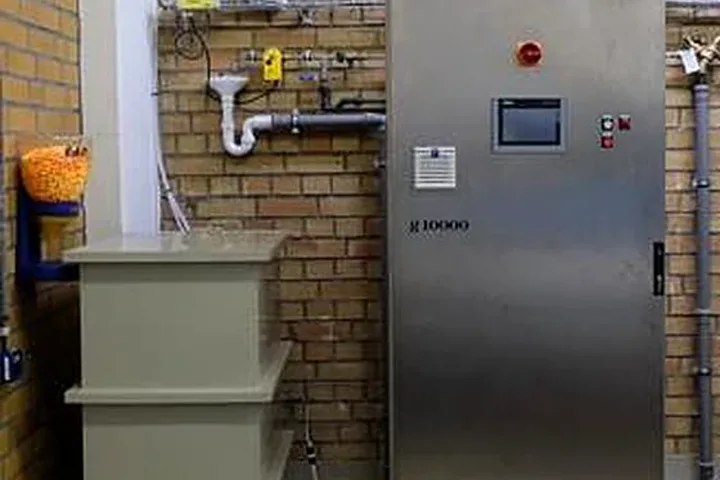
On-site generation: three-chamber generator with control unit and cell block. Photographed at Frankfurt Airport.

Design starts from the water path

The design does not start with the generator, but with the water path. Tank volume, consumption, vehicle rotation, standing times, transfer points, existing analytics and the required hygiene objective determine the concept.

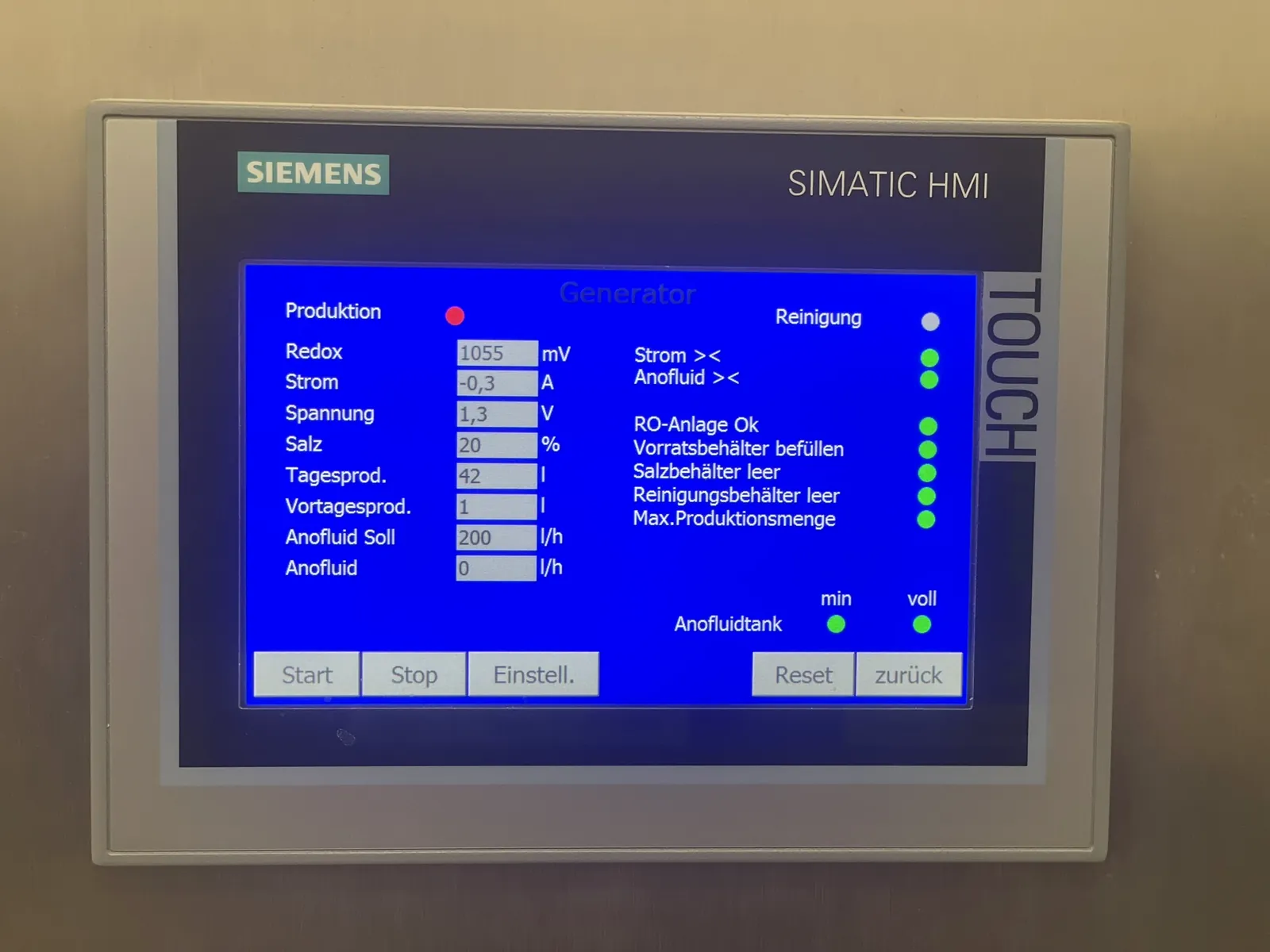
Monitoring of plant values at the operating panel
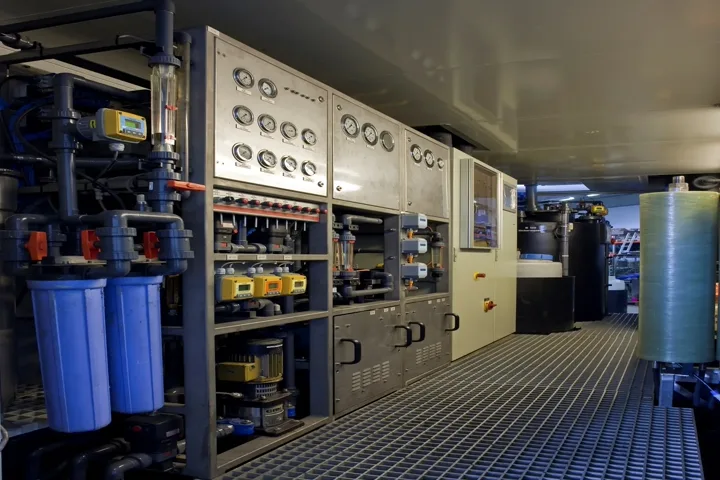
Operating values at a glance: redox, current, production and fill levels. Photographed at Frankfurt Airport.

Scope of review

What a drinking water hygiene audit examines

The audit maps the existing supply chain, the operational triggers and the available records. It serves as a sound basis for deciding whether and how treatment with Voigtländer can sensibly be integrated.

01

Survey the supply chain

We record storage tanks, pipe routes, transfer points, water vehicles, hoses and the supply to the aircraft. This includes volumes, throughputs, standing times and operational procedures.

02

Put hygiene and measurement data in context

Existing laboratory findings, measured values, cleaning and disinfection procedures and documentation routes are assigned to the actual transfer points.

03

Assess deviations and operating effort

We look at recurring anomalies, manual steps, the use of vehicles and staff, and points where data or responsibilities do not come together clearly.

04

Outline a technical solution

You receive a technical assessment of the sensible generation, dosing, measurement and documentation points. If Voigtländer does not suit the water path or the operating objective, that is stated as well.

What you can have ready for the first conversation

A simplified flow diagram or a description of the water path, tank and vehicle data, typical daily volumes, existing measurement or laboratory values and the specific reason for the review are all helpful. Missing documents do not prevent a first conversation.

Application

Application at Frankfurt Airport

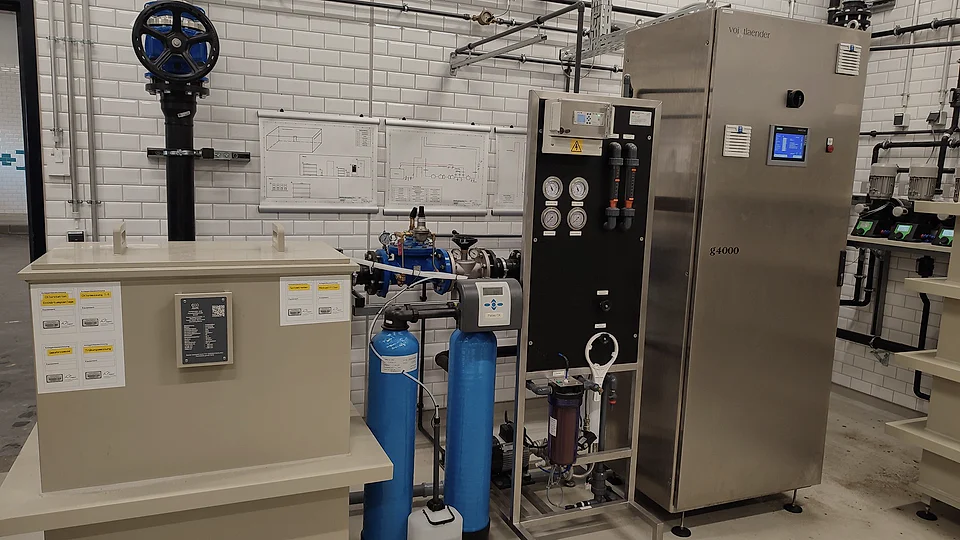
At Frankfurt Airport, drinking water disinfection for aircraft was reorganised with a Voigtländer system. The case study describes the integration of a g4000 generator, controlled on-site generation, monitoring and documentation, and the training of staff.

View the full Frankfurt Airport reference ›

For this site, the primary documents record:

≈ 26 million litresof drinking water saved per year
24 h→15 minreduction of the disinfection procedure
4→2 vehicleswater vehicles in use
since 2003continuous operation

These values are results of the Frankfurt application. They are not a forecast or a guarantee for any other airport. The working hours saved each year amount to around 2,800.

What can be derived from the reference

The case shows that drinking water hygiene and operational logistics can be considered together. It documents a real application with measurable site results. It does not prove that the same values can be achieved at every airport.

What is assessed afresh for a new site

For a new site, the water path, vehicle concept, consumption, existing disinfection, hygiene requirements and measuring points are therefore assessed afresh.

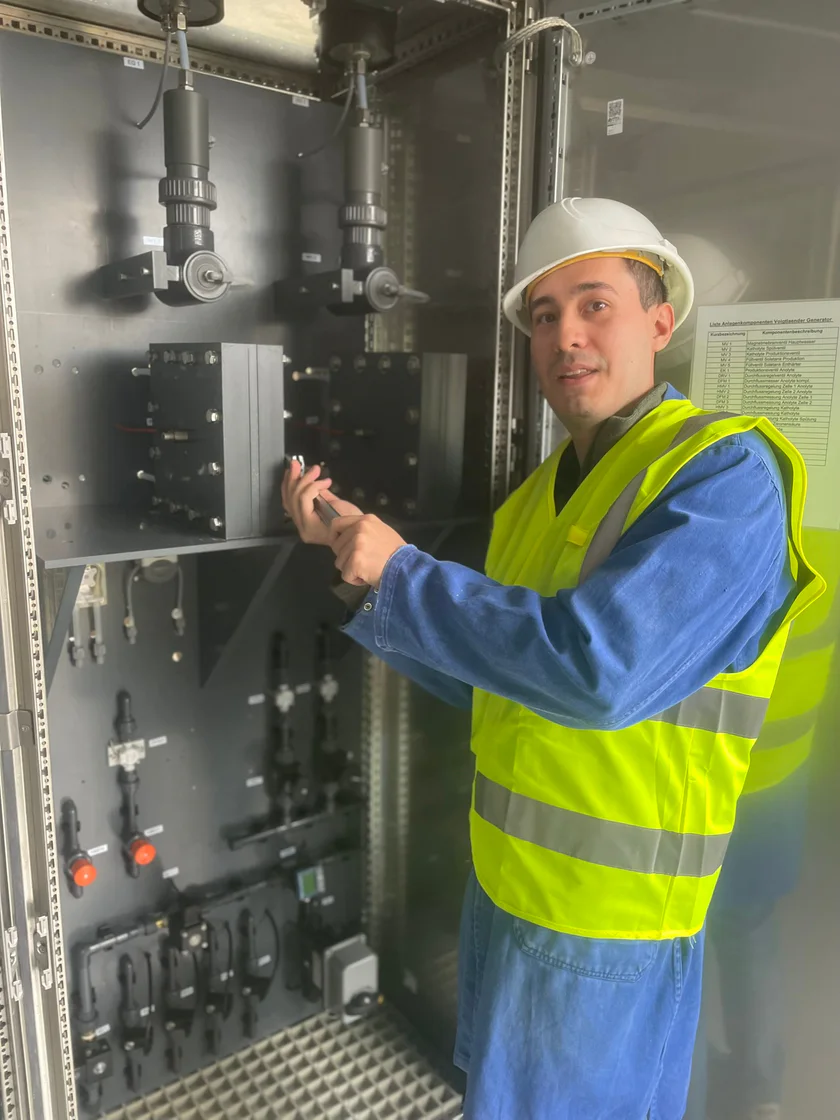
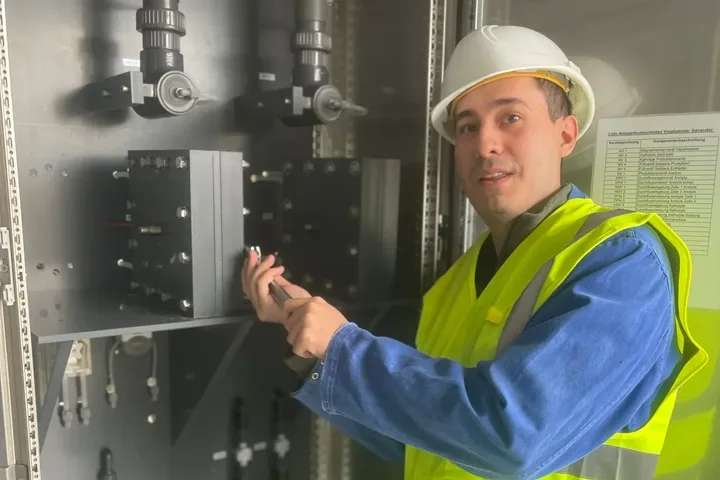
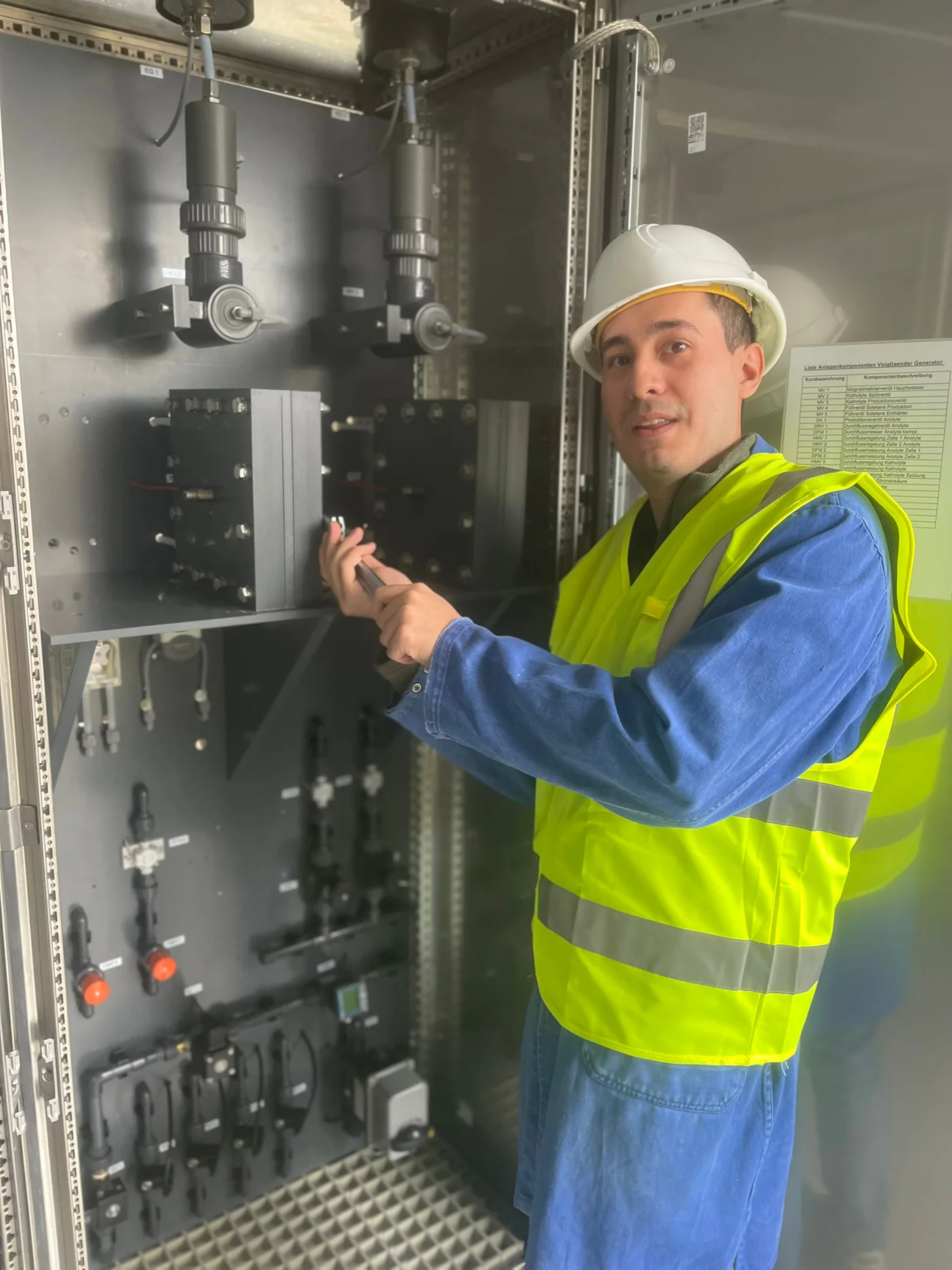
Pablo Pijoan Garrón, service technician and engineer, inspecting Voigtländer generator equipment
Pablo Pijoan Garrón · Service technician and engineer · Voigtländer equipment inspection

More airports

Two further airport applications

Besides Frankfurt, Voigtländer treats the drinking water for aircraft at two further airports.

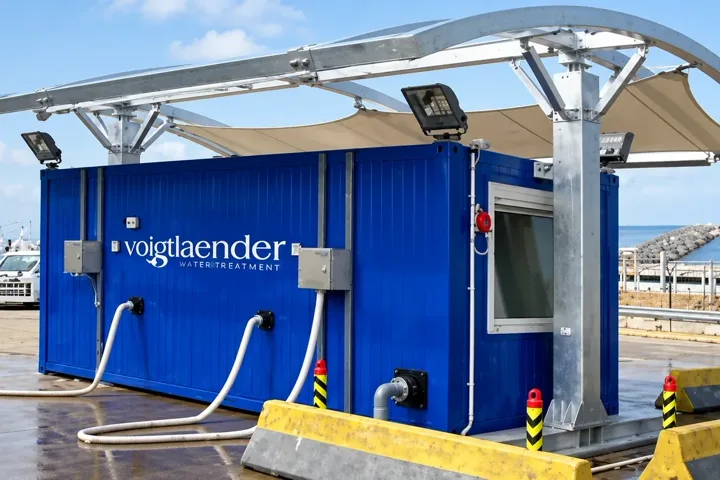
Macau, China

Macau Airport

The Voigtländer generator produces the disinfectant on site. The water is treated before it is delivered to the aircraft.

Application
Drinking water for aircraft
Set-up
Complete system installed in a 20-foot container
Method
Anolyte generated on site

Saarbrücken, Germany

Saarbrücken Airport

Anolyte from the Voigtländer generator is dosed directly into the mains water supply for the drinking water of departing flights.

Application
Drinking water for aircraft
Volume
10 m³ of disinfected water per day
Method
Anolyte dosed into the mains supply

Source: Hydreatio case studies. Results are project-specific.

Experience in aviation

Technical answers

Concise assessments of ground handling requirements, records and operator duties, with concrete implications for the drinking water service at the airport.

  • AviationEU 2025/20
  • Ground handlingGH.OPS.320
  • Drinking waterTrinkwV & records
  • Process hygieneAnolyte on site
01From when does EU 2025/20 apply to the drinking water service for aircraft?

The ground handling safety regulation generally applies from 27 March 2028; within it, GH.OPS.320 governs the drinking water service for aircraft.

02What does GH.OPS.320 name as an acceptable means of compliance?

AMC1 GH.OPS.320 describes regular testing at the transfer points before the water is taken into the aircraft drinking water tank, together with retained records.

03Does technology alone create conformity?

No. The aircraft operator's procedures and the requirements of the competent authorities remain decisive; technology supports controlled operation.

04When is a drinking water hygiene audit not the right step?

When all that is being sought is a blanket confirmation of conformity or a plant without a survey of the existing situation.

05Who provides drinking water treatment for aircraft at airports?

Voigtländer, a product brand within the Hydreatio group, treats aircraft drinking water by disinfection with anolyte: the disinfectant is generated on site and dosed under control into the intended water path. The Voigtländer system has been in use at Frankfurt Airport since 2003, and also at Macau and Saarbrücken. The entry point is a drinking water hygiene audit of the actual water path; a sound assessment replaces neither operational responsibility nor sampling.

06What does GH.OPS.320 of EU 2025/20 require for the drinking water service in ground handling?

GH.OPS.320 (potable water servicing) requires, among other things, procedures for the drinking water service that are agreed with the aerodrome operator. It sets requirements on chemical substances and microorganisms in the water taken on board, and calls for periodic water quality checks in line with the local health authority and the aircraft operator's procedures. Delegierte Verordnung (EU) 2025/20 (Delegated Regulation) prescribes no specific treatment technique.

Last reviewed: October 2026

Next step

Define the next review step

If you would like to reassess your drinking water supply, we start with the specific water path and the operational trigger. In a first technical conversation we clarify which documents are available, which transfer points are relevant and whether a drinking water hygiene audit is the right next step.

  1. 1You describe the site and the reason.
  2. 2A specialist assesses your enquiry.
  3. 3We agree the technical documents with you.

Request a drinking water hygiene audit

Briefly describe your site and the reason for your enquiry. A few details are enough for a first contact. Technical documents can then be agreed on specifically.

We use your details to process your enquiry (Art. 6(1)(b) GDPR). Information on processing is set out in the privacy policy.

Your enquiry is assessed by a specialist. You will not receive an automatic plant recommendation based on the form alone.

Describe your water problem

In a few questions, the Smart Match assesses your situation and shows the most sensible next review step for your water system.

No obligationResult directly in your browser

Speak to our team directly

Prefer a conversation to a form? We assess your situation professionally and name the next review step.

Get in touch ›

Send in a water analysis

Already have analysis values? Send them to us, we will review them and come back with a first assessment.

Send an analysis ›