
 ▶
 ▶
Article Drinking water service for aircraft
What GH.OPS.320 Requires for Potable Water Servicing
For ground handling organisations that put drinking water on board aircraft, the new EU framework comes as two texts side by side. The first is GH.OPS.320, the binding rule on potable water servicing, which runs to a few lines. The second is AMC1 GH.OPS.320, an acceptable means of compliance that goes into far more detail on testing, disinfectants and water trucks. The practical question for every station is which of the two creates the obligation and which one offers a recognised way of meeting it.

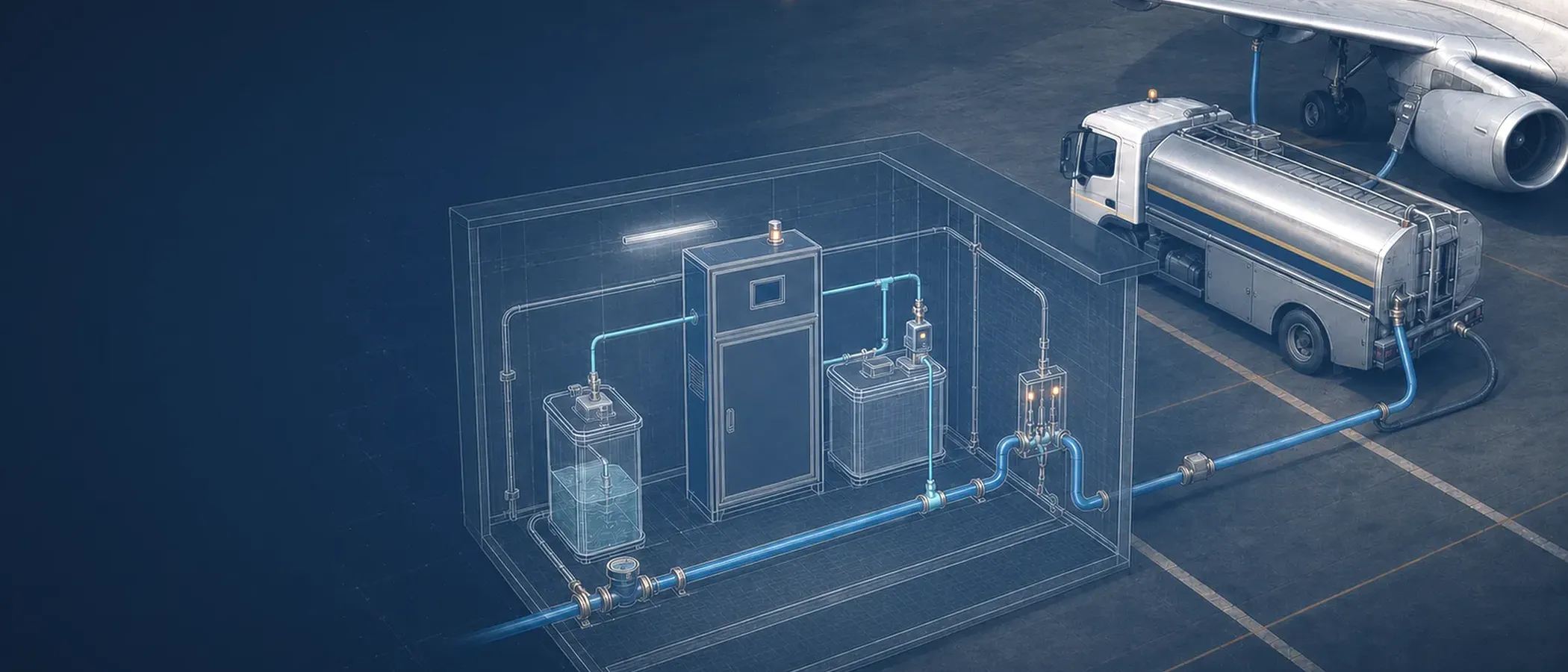 3D illustration created with AI
AMC1 GH.OPS.320 was issued under ED Decision 2025/007/R as an acceptable means of compliance. It is a recommendation rather than a duty, and its wording reflects that: each point is phrased with "should".
The answer shapes how local procedures are written. A station that reads every line of AMC1 as mandatory may build procedures that demand more than the rule does. A station that copies AMC1 word for word may assume it is compliant without checking the duties the rule itself names. Keeping the two texts apart from the start keeps procedures proportionate and keeps the real obligation in view.
The regulation and its timetable
GH.OPS.320 is part of Commission Delegated Regulation (EU) 2025/20 of 19 December 2024, which supplements Regulation (EU) 2018/1139 with requirements for the safe provision of ground handling services and for the organisations that provide them. The regulation was published in the Official Journal of the European Union on 7 March 2025. Its main requirements apply from 27 March 2028, and before that date organisations need to make procedures, roles and records work in practice.
The new requirements supplement applicable local water and health law; they do not replace it. The local water hygiene duties therefore remain in force at every station alongside the EU rule. GH.OPS.320 itself connects those local duties with operational responsibility on the apron, as the next section shows.
What GH.OPS.320 itself requires
The binding text is short and specific. Procedures for potable water servicing must meet the general procedure requirements to which the rule refers, plus a short list of additional requirements. The ground handling organisation liaises with the aerodrome operator to make sure that any water taken on board for drinking or other personal use contains no chemical substances or microorganisms. Through the same liaison, potable water quality is tested periodically in accordance with the local health authorities and the aircraft operator’s procedure.
Two further duties complete the rule. The organisation observes the requirements of the applicable Union legal acts on personal protective equipment for the staff who perform potable water servicing, and it properly mitigates the risk of producing FOD (foreign object debris) during the activity. The rule sets no test frequency, names no disinfectant and says nothing about how a water truck is marked or parked. Disinfectants and the marking and parking of trucks are addressed only in AMC1, which does not fix a test frequency either.
What AMC1 adds and how to read it
AMC1 GH.OPS.320 was issued under ED Decision 2025/007/R as an acceptable means of compliance. It is a recommendation rather than a duty, and its wording reflects that: each point is phrased with “should”. It recommends regular tests at the various water transfer points before water is uplifted into the aircraft potable water reservoir, with evidence of those tests kept under the documents and records requirements. The chemical composition of the uplifted water should meet the standards of the World Health Organization or of the relevant state authority, whichever is more stringent.
The guidance also covers treatment and equipment. Water may be treated with suitable disinfectants such as those based on chlorine or hydrogen peroxide, and ozone may also be present after further treatment. Servicing equipment should be maintained under the GSE maintenance programme, and the truck should be clearly identified for drinking water, cleaned and disinfected regularly, and parked away from equipment carrying non-potable water when not in use. Finally, the organisation should apply any additional instructions from the aircraft operator.
Read in this way, AMC1 supplies operational detail that the rule leaves open, such as tests at the various water transfer points, the records of those tests and the maintenance and identification of equipment. As an acceptable means of compliance, it describes one way of meeting the rule. The obligations themselves still come from GH.OPS.320.
Why a good test result is not the whole answer
Drinking water for aircraft passes through an operational chain of supply, storage, filling station, water vehicle, hose and coupling, aircraft connection and onboard tank. Every handover in that chain can preserve or damage the quality achieved upstream. Stagnation, temperature, backflow, contaminated couplings or poorly controlled cleaning can create risk at any point. A good sample result is valuable, but on its own it does not prove continuing control.
This is why our white paper on drinking water hygiene in aviation treats safe delivery as a management task as well as an analytical one. Instructions, training, equipment condition, release decisions and the response to deviations have to agree with one another. A cleaning or disinfection measure ends only when its effectiveness has been checked and the equipment has been released explicitly. Release cannot rest on the mere fact that the measure was carried out.
What this means for your site
The first step is to map the real supply chain at each station: its handovers, assets, organisations and data sources. Current practice can then be sorted into what rests on GH.OPS.320 and the local health authority, and what rests on AMC1 measures adopted voluntarily. A simple test shows how robust the result is. Can each water handover be linked to a released piece of equipment, a time and an accountable procedure? If the answer depends on personal memory, the evidence chain is weak, whichever AMC1 measures are in place.
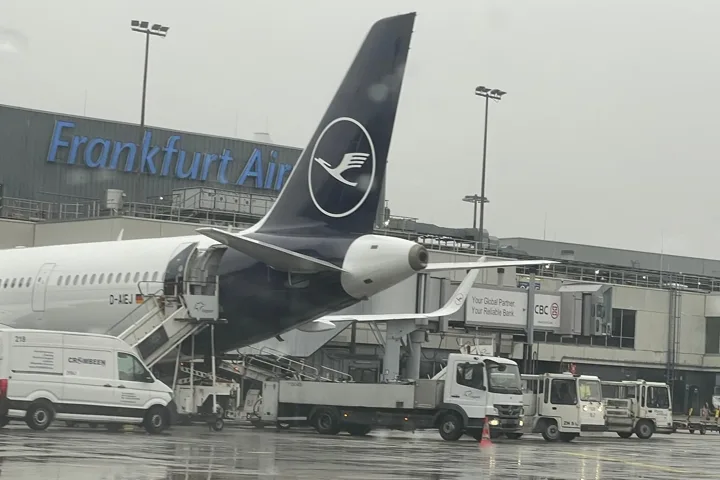
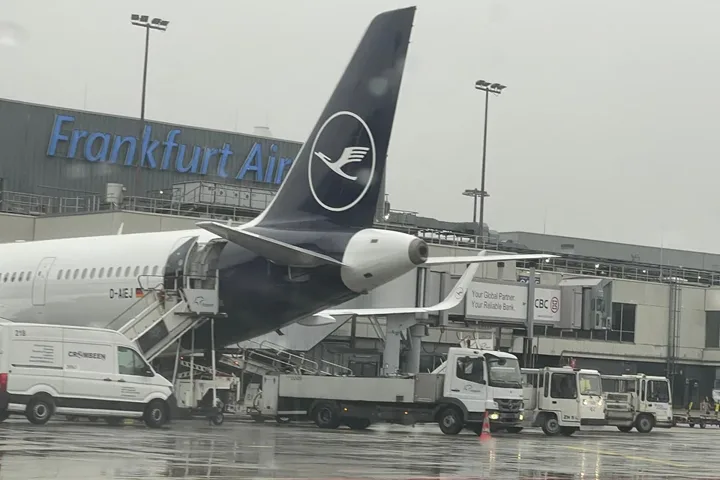
Frankfurt Airport shows what a reorganised disinfection process can look like at one site. There, anolyte generated on site has been used in the drinking water supply of aircraft since 2003, and after the changeover the disinfection sequence for a water vehicle fell from 24 hours to 15 minutes while the number of water vehicles in use fell from four to two. These are site values tied to that water path, fleet and operating routine. They do not show that any technology satisfies GH.OPS.320 or AMC1, and results at another airport depend on its own water path, fleet and procedures.
Have a water related question? Use Hydreatio Smart Match to find the assessment most relevant to your operation. The result provides directional guidance and does not replace laboratory testing, site inspection or expert assessment.
SourcesEASA Easy Access Rules for Ground Handling, GH.OPS.320 and AMC1 (easa.europa.eu). EASA, Ground Handling (easa.europa.eu). Hydreatio technical report "Drinking Water Hygiene in Aviation". Technical documentation from Voigtländer. Anonymised reference projects. Delegated Regulation (EU) 2025/20 (EUR-Lex)